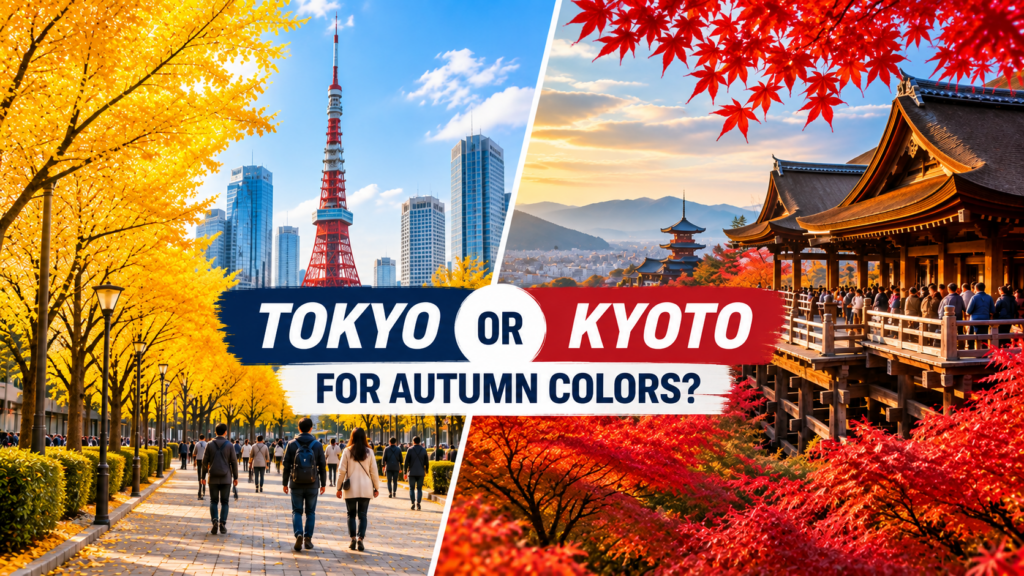
Tokyo and Kyoto can both be excellent autumn destinations, but they suit different kinds of trips. If fall color is one of the main reasons for your Japan visit, the better choice depends less on which city is “more beautiful” and more on your dates, crowd tolerance and how much sightseeing variety you want around the foliage.
Quick decision: choose Kyoto if temples, historic districts and maple scenery are the priority. Choose Tokyo if you want autumn color mixed with neighborhoods, food, shopping and easier flexibility when the leaves are not yet at their best.
Tokyo vs Kyoto for autumn at a glance
| Decision | Tokyo | Kyoto |
|---|---|---|
| Best for | Flexible city trip with foliage as one part of the itinerary | Temple gardens and classic autumn scenery |
| Typical feel | Ginkgo avenues, parks and gardens among a modern city | Maples around temples, hillsides and traditional districts |
| Crowd pressure | Busy at famous spots, but many alternatives | Very concentrated at headline temples and districts |
| If your timing misses peak color | Easier to pivot to other city experiences | Still rewarding, but foliage-focused plans lose more of their purpose |
When should you go?
Do not treat a fixed date from a previous year as a guarantee. Autumn color moves with temperature, elevation and local conditions. The Japan Weather Association explains that cooler autumn temperatures generally accelerate coloring while warmer conditions delay it, and its forecasts are updated during the season. For 2026, the broader outlook has also called for lingering late-summer heat, so travelers should keep dates flexible rather than booking around one assumed “peak day.”
As a planning rule, higher-elevation areas color earlier, while lower urban areas often reach their strongest color later in autumn. If your trip is specifically built around foliage, check the latest forecast again shortly before departure and again while you are in Japan.
Choose Tokyo if flexibility matters
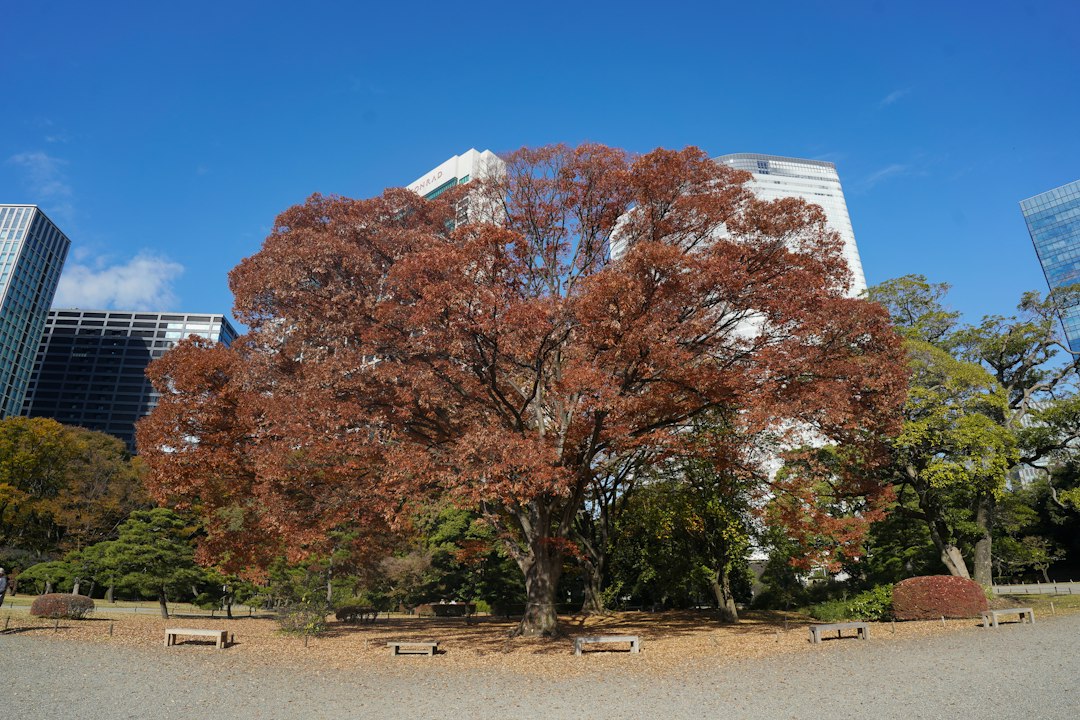
Tokyo is the safer base when autumn leaves are important but not the only reason for the trip. You can build foliage stops into a neighborhood day instead of spending the whole day chasing color. Parks, formal gardens and ginkgo-lined streets give you several different looks, and poor weather or underwhelming color does not derail the rest of your itinerary.
This is especially useful for first-time visitors. You can combine seasonal scenery with food, observation decks, museums and shopping without changing hotels. Start with our Tokyo travel guide, then use the Where to Stay hub to choose a practical base.
Tokyo works particularly well when:
- You have only a few days and need a flexible schedule.
- You want autumn color without making every day foliage-focused.
- You prefer spreading crowds across multiple neighborhoods and gardens.
- Your Japan trip includes shopping, food and nightlife as major priorities.
Choose Kyoto if autumn scenery is the trip
Kyoto has the stronger case when your ideal autumn trip is built around temples, maple gardens and traditional streets. The combination of red and orange leaves with temple architecture is difficult to reproduce elsewhere, and you can build entire days around different parts of the city.
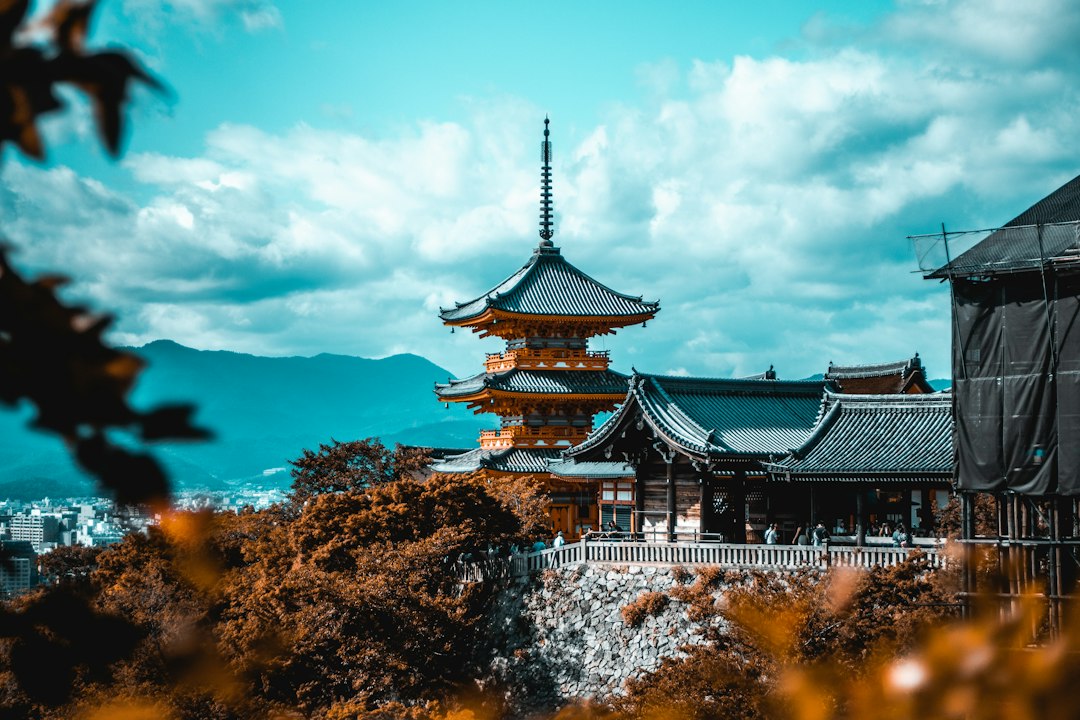
The trade-off is crowd concentration. Famous areas can become extremely busy, particularly when seasonal color is strong. An early start, geographically compact days and realistic expectations matter more here than trying to collect every famous viewpoint. Our Kyoto travel guide is the best starting point, and the Kyoto accommodation guide can help you reduce unnecessary cross-city travel.
Kyoto works particularly well when:
- Temple-and-maple scenery is a top reason for visiting Japan.
- You are willing to start early and plan around crowds.
- You prefer historic atmosphere over big-city variety.
- You can give Kyoto several nights rather than treating it as a rushed day trip.
What if you can visit both?
For a first Japan trip of roughly a week or longer, you usually do not need to choose one city exclusively. Tokyo and Kyoto complement each other. The important decision is how many hotel changes you are willing to make and whether your dates line up with the seasonal progression.
A simple Tokyo–Kyoto route is usually more useful than adding extra overnight stops just to chase leaves. See our Japan itineraries and luggage strategy guide before adding more bases.
How to plan without overcommitting to a forecast
- Book the trip around cities you would enjoy anyway. Foliage should improve the itinerary rather than determine whether the entire trip succeeds.
- Keep at least one flexible half-day. Use it for the spot currently showing the best color.
- Check current local reports close to travel. Seasonal forecasts become more useful as your dates approach.
- Use elevation strategically. If lowland color is late, a higher or cooler day trip may be further along.
- Expect crowds at famous Kyoto locations. Start early and avoid building an itinerary that requires crossing the city repeatedly.
Final decision
Pick Tokyo when you want a versatile city trip that happens to include excellent autumn scenery. Pick Kyoto when classic temple-and-maple landscapes are central to why you are traveling. If you have enough time, combine them rather than trying to declare one universally better.
Seasonal note: Autumn foliage timing changes each year. This guide was reviewed in September 2026; check current Japan Weather Association or local foliage updates shortly before your trip.
Photo credits: Yosuke Ota, Cosmin Georgian and Daniel Beauchamp via Unsplash.