For most travelers moving from Tokyo to Kyoto, the Tokaido Shinkansen is the simplest way to make the transfer. The important choice is not whether to take the bullet train, but which service to use, whether to reserve a seat, what to do with luggage, and how the transfer fits the rest of your day.
The short answer
- Choose Nozomi if you want the fastest and most frequent Tokyo–Kyoto option.
- Choose Hikari if you have a reason to avoid Nozomi or your ticket/pass conditions make it preferable.
- Choose Kodama mainly when a specific discounted product makes the slower trip worthwhile.
- Reserve a seat when traveling in a busy period, as a family/group, with oversized baggage, or when you simply want certainty.
Nozomi, Hikari or Kodama?
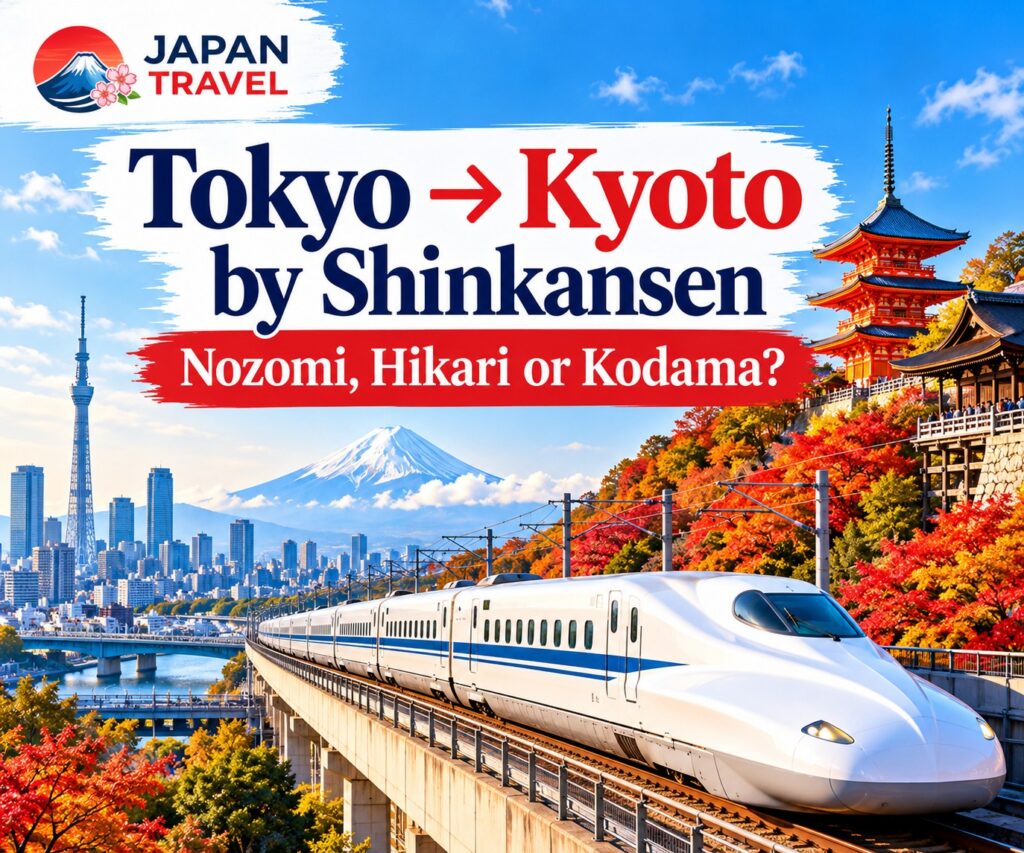
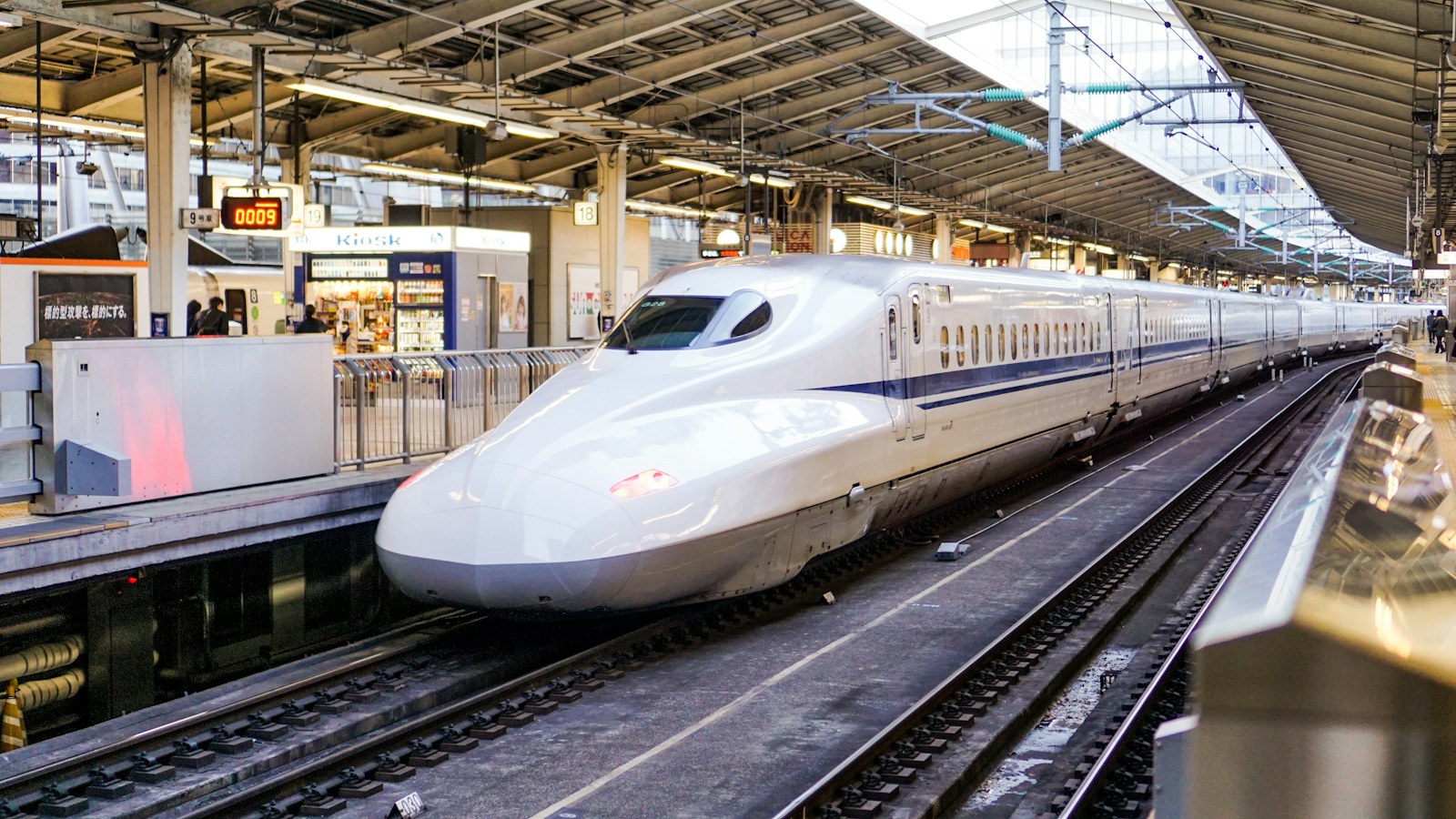
All three operate on the Tokaido Shinkansen, but they make different numbers of stops. For a straightforward Tokyo-to-Kyoto transfer, Nozomi is normally the practical first choice because it makes the fewest stops and has frequent departures. Hikari stops more often, while Kodama stops at every station and takes considerably longer.
| Train | Best for | Main trade-off |
|---|---|---|
| Nozomi | Most Tokyo–Kyoto travelers | Reserved-seat pricing differs from Hikari/Kodama |
| Hikari | Travelers whose ticket/pass conditions favor it | Fewer departures and more stops than Nozomi |
| Kodama | Travelers using a worthwhile slow-train deal | Much longer journey |
JR Central’s current information shows Kodama taking roughly 3 hours 40 minutes between Tokyo and Kyoto, while Nozomi is substantially faster. Always check your exact departure in the official timetable rather than building a tight connection around a generic journey time.
Should you book in advance?
For ordinary dates, you can often keep some flexibility. SmartEX currently allows reservations from one year before travel until shortly before departure, subject to availability, and lets eligible reservations be changed before boarding under its rules.
Advance reservations become more valuable when your date falls in a major Japanese travel period, when several people need seats together, or when a particular departure matters. JR Central also designates some peak periods when Nozomi operates with reserved seating only, so do not assume a non-reserved Nozomi car will exist on every travel date.
How much does Tokyo to Kyoto cost?
Do not plan around one fixed fare copied from an old blog post. SmartEX prices vary by train, seat class, travel season and any advance-purchase product available for your date. Reserved-seat prices can change between off-peak, regular, peak and highest-peak periods. Check the official SmartEX fare shown for your exact date before paying.
One useful 2026 change: the old SmartEX round-trip discount product ended on March 31, 2026. If you see an older guide recommending it for a 2026 trip, that advice is outdated.
Tokyo Station or Shinagawa?
Both are valid Tokaido Shinkansen boarding points. Tokyo Station makes sense when you are staying around Marunouchi, Ginza, Ueno or areas with easy access to central Tokyo. Shinagawa can be more convenient from southern Tokyo and some airport-side routes. Compare the hotel-to-platform journey rather than automatically crossing the city to Tokyo Station.
What about luggage?
Large luggage is where an easy transfer can become stressful. JR Central currently requires travelers with baggage whose three dimensions total more than 160 cm to reserve an appropriate seat with an oversized-baggage area on the Tokaido Shinkansen. Items over 250 cm total dimensions cannot be brought aboard under the stated rules.
If you are doing a multi-city route, you may be better off forwarding the main suitcase and carrying only what you need. Our Japan luggage strategy guide compares carrying, storage and forwarding.
Can you see Mount Fuji?
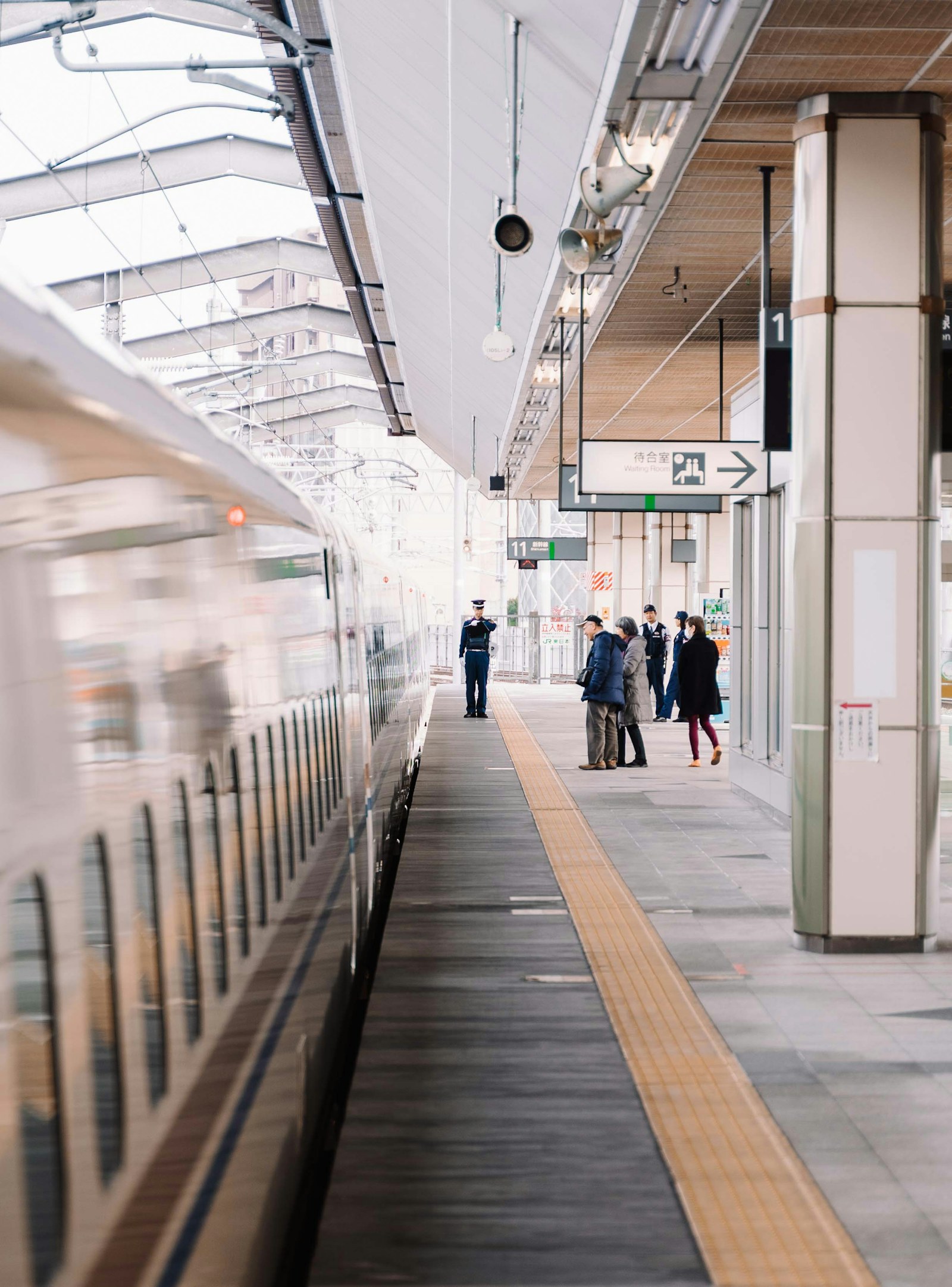
On a clear day, the Tokaido route can give you a memorable Mount Fuji view. JR Central identifies Mount Fuji on the right-hand side when traveling from Tokyo toward the Fuji area. Weather can hide the mountain completely, so treat the view as a bonus rather than a reason to lock the whole transfer around one seat.
What should you do on arrival in Kyoto?
Kyoto Station is a major transport hub, but many visitors still need a subway, bus, taxi or local train to reach their accommodation. If you have only a few days in Kyoto, choosing the right base can save more time than shaving a few minutes off the Shinkansen journey. See our Where to Stay in Kyoto guide and Kyoto travel guide before booking.
Booking and trip-planning options
If Kyoto is your next overnight base, compare Kyoto hotels on Booking.com or compare Kyoto hotels on Agoda. For maps, platform changes and navigation after arrival, check Japan eSIM options with Saily.
Affiliate disclosure: Japan Travel may earn a commission if you book through selected links, at no extra cost to you.
Our Tokyo-to-Kyoto decision rule
Use Nozomi for the normal first-choice transfer, reserve when certainty matters, and solve your luggage before travel day. Choose Hikari or Kodama because a specific ticket, timing or price works better for your trip—not because one train is inherently a more authentic experience.
For the bigger route decision, use our Start Here Japan planner, Japan transportation guide, and JR Pass vs IC cards comparison.
Reviewed October 2026. Shinkansen fares, peak-period seating rules, timetables and baggage policies can change. Check JR Central/SmartEX for your exact travel date before booking.