
The Japan Rail Pass is no longer an automatic money-saver. In 2026, the right decision depends on one thing: how much expensive long-distance JR travel you will actually do inside the pass period. For many first-time Tokyo–Kyoto–Osaka trips, individual tickets are simpler and cheaper. For fast-moving itineraries that add Hiroshima or several long-distance JR legs, the pass can still make sense.
The short answer
- Buy individual tickets for a typical Tokyo → Kyoto → Osaka trip with only a few long-distance rides.
- Calculate the 7-day JR Pass carefully if you add Hiroshima and return east within seven consecutive days.
- Do not buy a nationwide pass just for local city transport. IC cards are usually the practical tool for subways, buses and short urban trips.
- Remember Nozomi is not automatically included: JR Pass holders need a separate special ticket to use Nozomi or Mizuho services.
Current Japan Rail Pass prices in October 2026
JR’s official online prices for an Ordinary adult pass are ¥50,000 for 7 days, ¥80,000 for 14 days and ¥100,000 for 21 days. If you buy through a designated overseas agency on or after October 1, 2026, the corresponding Ordinary adult prices are ¥53,000, ¥84,000 and ¥105,000. These figures were checked against the official Japan Rail Pass pricing page in October 2026.
That difference matters because the break-even point is much higher than it was years ago. Do not use an old blog post or pre-2023 rule of thumb to decide.
Decision 1: Tokyo, Kyoto and Osaka only
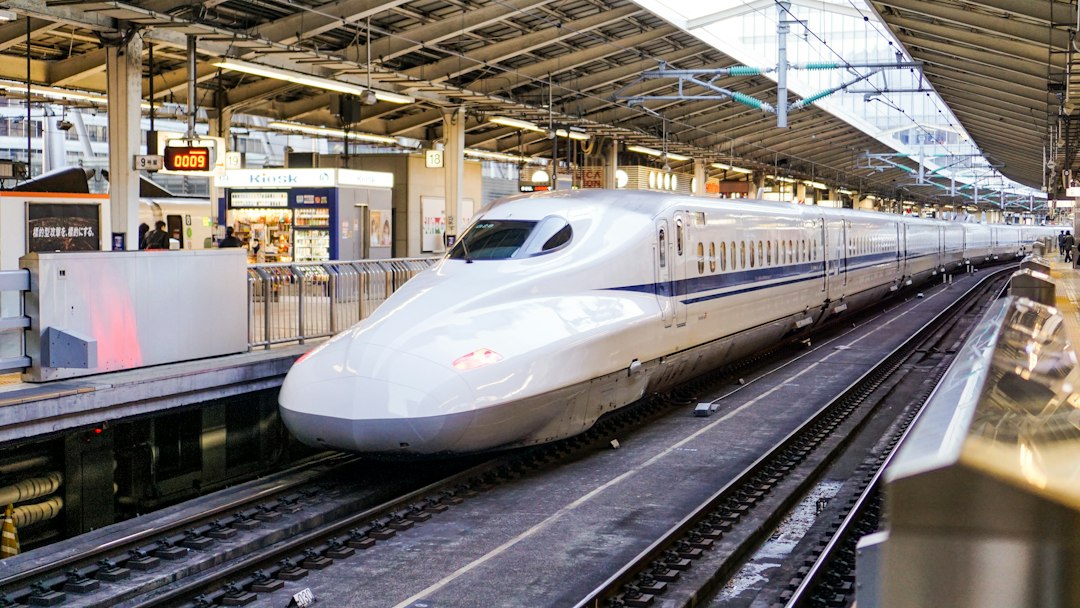
For the classic first trip—Tokyo, Kyoto and Osaka—the nationwide JR Pass is usually difficult to justify on price alone. You are paying for unlimited JR travel, but your itinerary may contain only one major Tokyo–Kyoto Shinkansen ride plus the much shorter Kyoto–Osaka leg. Even if you return to Tokyo, compare the actual ticket total before buying the pass.
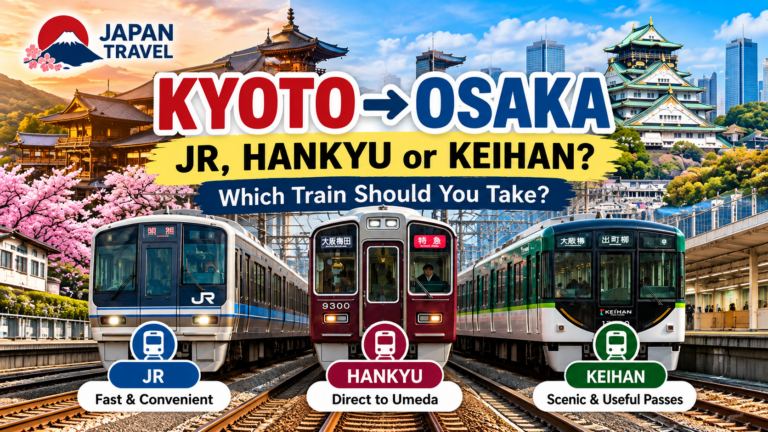
If this is your route, start with our Tokyo to Kyoto Shinkansen guide and Kyoto to Osaka train comparison. The fastest or most convenient train is not always a JR service, especially between Kyoto and Osaka.
Decision 2: Add Hiroshima
Hiroshima changes the calculation because it adds a substantial Shinkansen leg. A route such as Tokyo → Kyoto → Hiroshima → Tokyo packs much more long-distance JR travel into a short period. This is the kind of itinerary where a 7-day pass deserves a real comparison rather than an automatic no.
However, timing matters. The seven days are consecutive. If your expensive train rides fall outside the same validity window, you may be paying for pass days that do little work.
Decision 3: Are you counting local trains too heavily?
This is a common planning mistake. Tokyo, Kyoto and Osaka contain many journeys that are inexpensive compared with a Shinkansen trip, and not every useful subway, private railway or bus is covered by the nationwide JR Pass. A pass should win because of your major JR journeys, not because you hope to recover the cost through lots of small city rides.
For local transport, read our Suica, PASMO or ICOCA guide. If you are still deciding between passes and stored-value cards, see Japan Rail Pass vs IC cards.
The Nozomi issue in 2026
The nationwide pass does not simply let you board any Nozomi or Mizuho train at no extra cost. JR sells a special pass-holder ticket for these services. For example, the official surcharge listed for Tokyo–Kyoto is ¥4,960. If you want the fastest and most frequent Nozomi departures, include that extra cost in your comparison rather than assuming it is covered.
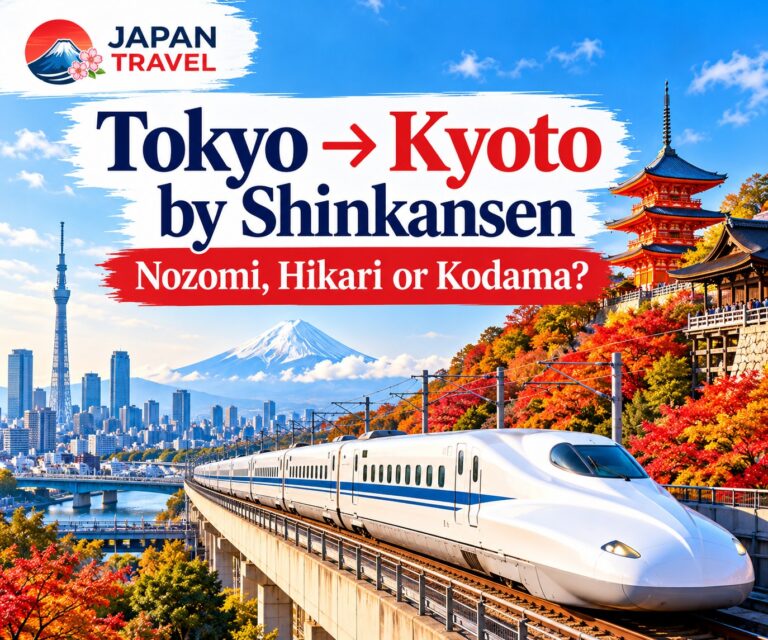
Travelers who are happy using eligible Hikari services may avoid that surcharge, but the timetable may be less flexible. Our Nozomi vs Hikari vs Kodama guide explains the trade-off.

A simple break-even method
- Write down every long-distance JR trip you expect to take during the same 7-, 14- or 21-day window.
- Price those trips as individual tickets using current official booking information.
- Add only the local JR trips you are genuinely likely to take—not every possible ride.
- Compare that total with the current pass price.
- If the difference is small, choose based on flexibility and convenience rather than forcing the pass to win by a few hundred yen.
When individual tickets are the better choice
Choose individual tickets when your itinerary is geographically simple, when your expensive rides are spread across more days than the pass window, or when you plan to use private railways and subways heavily. Individual tickets also let you choose the train that best fits each route without feeling obligated to use JR everywhere.
When the JR Pass can still be worth it
The nationwide pass becomes more interesting for travelers covering several distant regions quickly—for example, combining Tokyo, Kansai and Hiroshima with additional JR-heavy side trips. It can also have convenience value for travelers who expect to change plans frequently, but convenience should be a bonus after the arithmetic is reasonably close.
What about regional JR passes?
Do not treat the nationwide pass as the only alternative to individual tickets. Regional JR products can be a better fit when most of your travel is concentrated in one part of Japan. Compare the coverage carefully with your exact route; a cheaper regional pass is not useful if your key journeys fall outside its area.
Our recommendation
For most first-time visitors doing Tokyo, Kyoto and Osaka at a comfortable pace, start by assuming individual tickets and make the JR Pass prove its value. If your plan adds Hiroshima or multiple long-distance JR journeys in a tight window, calculate again. The pass is now a route-specific purchase, not a default Japan travel essential.
If you are still building the whole trip, use our 10-day Japan itinerary, Japan transportation guide and luggage strategy guide together.
For travelers who need mobile data for live train navigation, check Japan eSIM options with Saily. For longer intercity planning where multiple transport modes are relevant, compare transport options with Bookaway.
Affiliate disclosure: Japan Travel may earn a commission if you purchase through selected links, at no extra cost to you. We only include services relevant to this planning decision.
Price check: October 2026. Japan Rail Pass prices and Nozomi/Mizuho pass-holder ticket details can change; verify current official JR information before purchase.