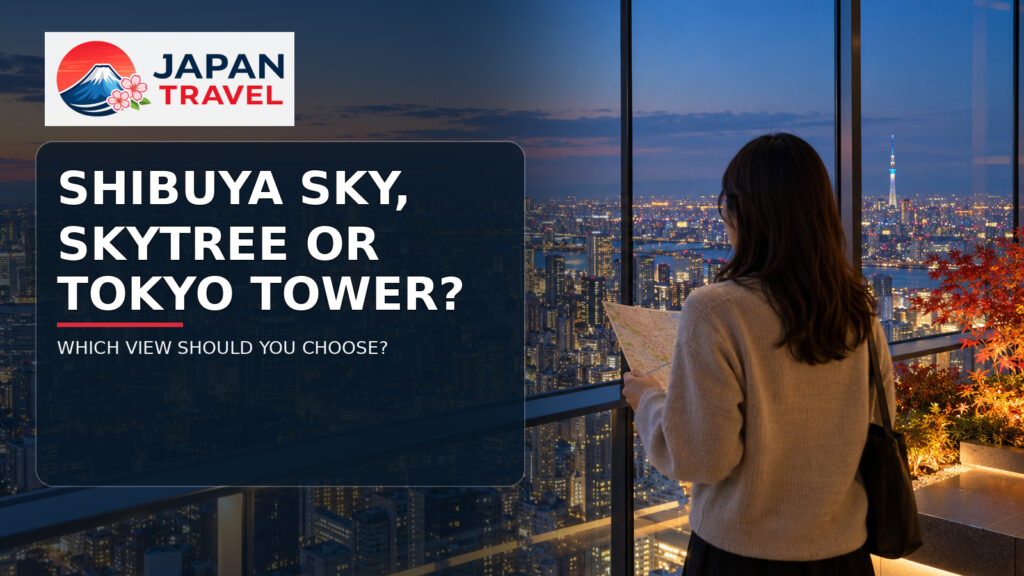
Quick answer: Choose Shibuya Sky for the most memorable open-air experience and a Shibuya-centered day; choose Tokyo Skytree for the highest panorama, the strongest bad-weather backup and an Asakusa/Sumida itinerary; choose Tokyo Tower for the lowest entry price, classic atmosphere and an easy stop near Zojoji, Azabudai Hills or Roppongi. If this is your only Tokyo observation deck, most first-time visitors should pick the one that fits their sightseeing area rather than crossing the city for a marginally different view.
Tokyo has dozens of viewpoints, but these three create the most common booking decision. Their decks are not interchangeable: one is an outdoor rooftop experience, one is a high-altitude indoor panorama, and one is a historic landmark with a simple budget option. This guide compares the practical differences using prices and operating details checked on October 27, 2026.
Shibuya Sky vs Skytree vs Tokyo Tower at a glance
| Decision | Best choice | Why |
|---|---|---|
| Best overall experience | Shibuya Sky | Open-air rooftop, dramatic city setting and excellent pairing with Shibuya |
| Highest viewpoint | Tokyo Skytree | Tembo Deck at 350 m; optional Tembo Galleria reaches 450 m |
| Best in poor weather | Tokyo Skytree | Large indoor decks and expansive facilities below |
| Cheapest adult ticket | Tokyo Tower | Main Deck costs ¥1,500 |
| Best for sunset photos | Shibuya Sky | Open rooftop and strong foreground views, but timed slots sell quickly |
| Best with Asakusa | Tokyo Skytree | Fits naturally into an eastern Tokyo day |
| Best with central Tokyo | Tokyo Tower | Easy to combine with Shiba Park, Zojoji, Roppongi and Azabudai |
Current ticket prices and booking pressure
Shibuya Sky: adult web tickets cost ¥2,700 for entry by 2:59 p.m. and ¥3,400 from 3:00 p.m. Counter prices are ¥3,000 and ¥3,700 respectively. Tickets are sold for dates up to two weeks ahead, and an adult slot that sells out online is also sold out at the counter. That makes Shibuya Sky the one to reserve first, especially for the hour before sunset. Check the official Shibuya Sky ticket page before paying.
Tokyo Skytree: web pricing is variable. The official site currently lists the Tembo Deck from ¥1,800 and the Tembo Deck plus Tembo Galleria from ¥3,000 for adults aged 15 and over. A ¥500 issuance charge is added when purchasing at the fourth-floor ticket counter or machines. Because the price changes by date and entry time, use the official Skytree ticket calendar rather than relying on a single fare quoted months earlier.
Tokyo Tower: the adult Main Deck ticket is ¥1,500. The Top Deck Tour, which includes both the 150 m Main Deck and 250 m Top Deck, costs ¥3,300 online or ¥3,500 at the counter. The Main Deck is the clear budget winner; the Top Deck is a separate, timed premium experience. Confirm details on the official Tokyo Tower fees page.
Price note: attraction prices, operating hours and packages can change. Recheck the official site for your exact visit date.
Choose Shibuya Sky for the experience, not just the height
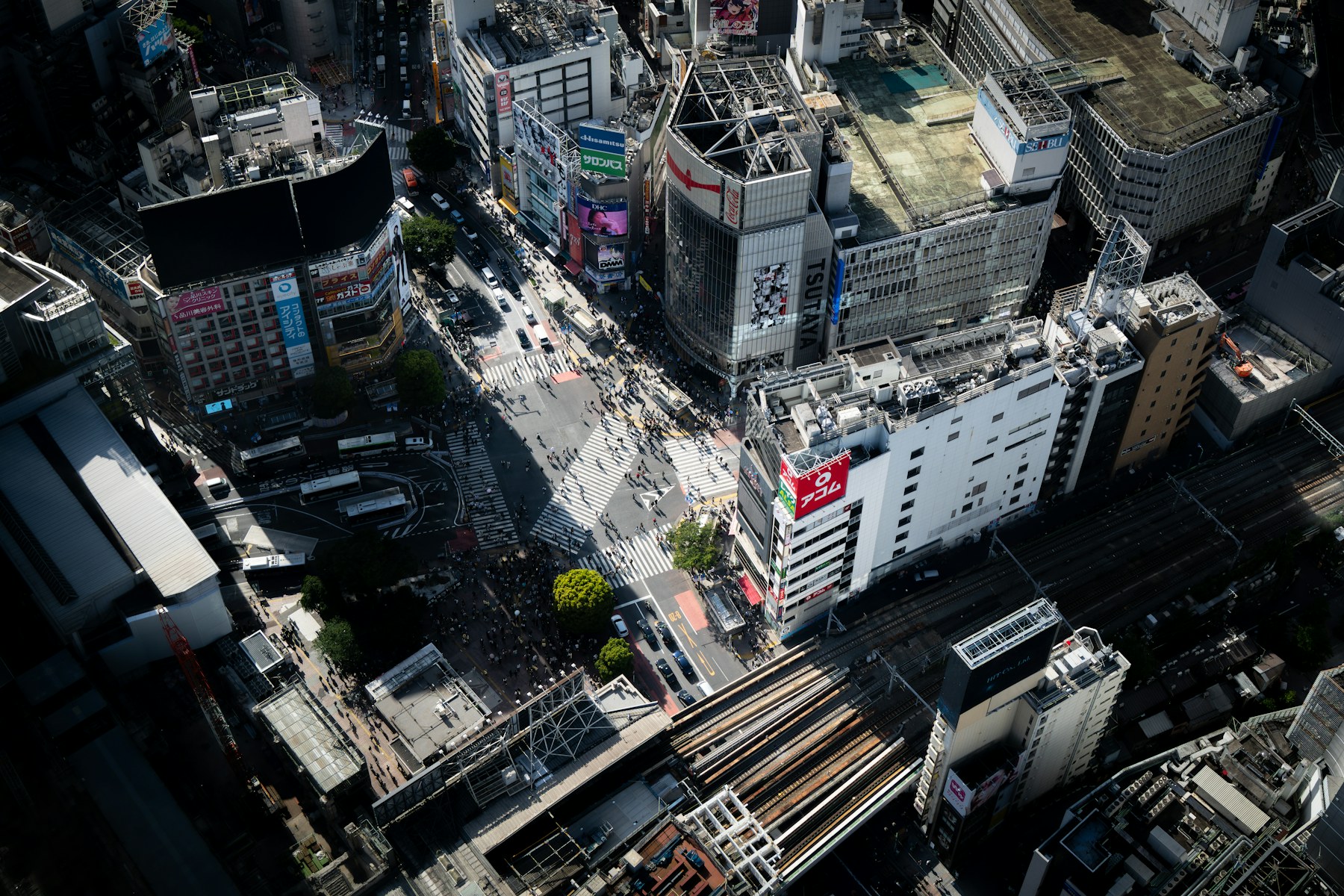
Shibuya Sky sits about 229 m above Shibuya and feels more like a designed attraction than a conventional observation room. The journey moves through indoor transition spaces before opening onto the rooftop Sky Stage. You see the crossing and dense Shibuya streets below, central Tokyo towers in several directions, and—on a clear day—Mount Fuji on the western horizon.
Its decisive advantage is the open sky. Glass walls are still present for safety, but the wind, changing light and rooftop scale create stronger photographs and a more memorable sense of place. Its decisive weakness is also the rooftop: rain, lightning or strong wind can close Sky Stage without closing the indoor gallery. Loose items and bags cannot be carried onto the rooftop, so allow time for the provided lockers and follow staff instructions.
Best for: couples, photographers, first-time visitors already spending an afternoon in Shibuya, and travelers who treat one sunset viewpoint as a trip highlight.
Skip it when: your Tokyo dates are fixed during unstable weather, you dislike committing to a narrow timed slot, or Shibuya is otherwise absent from your plan. If you are choosing a hotel nearby, compare Shinjuku and Shibuya as Tokyo bases.
Choose Tokyo Skytree for height, scale and an indoor day
Tokyo Skytree is the most impressive choice when your priority is understanding Tokyo’s physical scale. The Tembo Deck at 350 m already sits far above surrounding buildings; the 450 m Tembo Galleria adds a sloping glass corridor and an even higher perspective. On a clear day, the view stretches well beyond the central skyline.
Skytree is also the easiest of the three to build into a family or poor-weather day. The observation levels are indoors, while Tokyo Solamachi at the base adds restaurants, shops and nearby attractions. That does not guarantee visibility—low cloud or haze can still hide the distance—but the visit is less dependent on an exposed rooftop remaining open.
The tradeoff is location. Oshiage is ideal with Asakusa and Sumida, but less convenient if the rest of your day is in Shibuya, Shinjuku or Roppongi. Pair it with Sensoji and eastern Tokyo rather than spending an hour each way solely for a higher number.
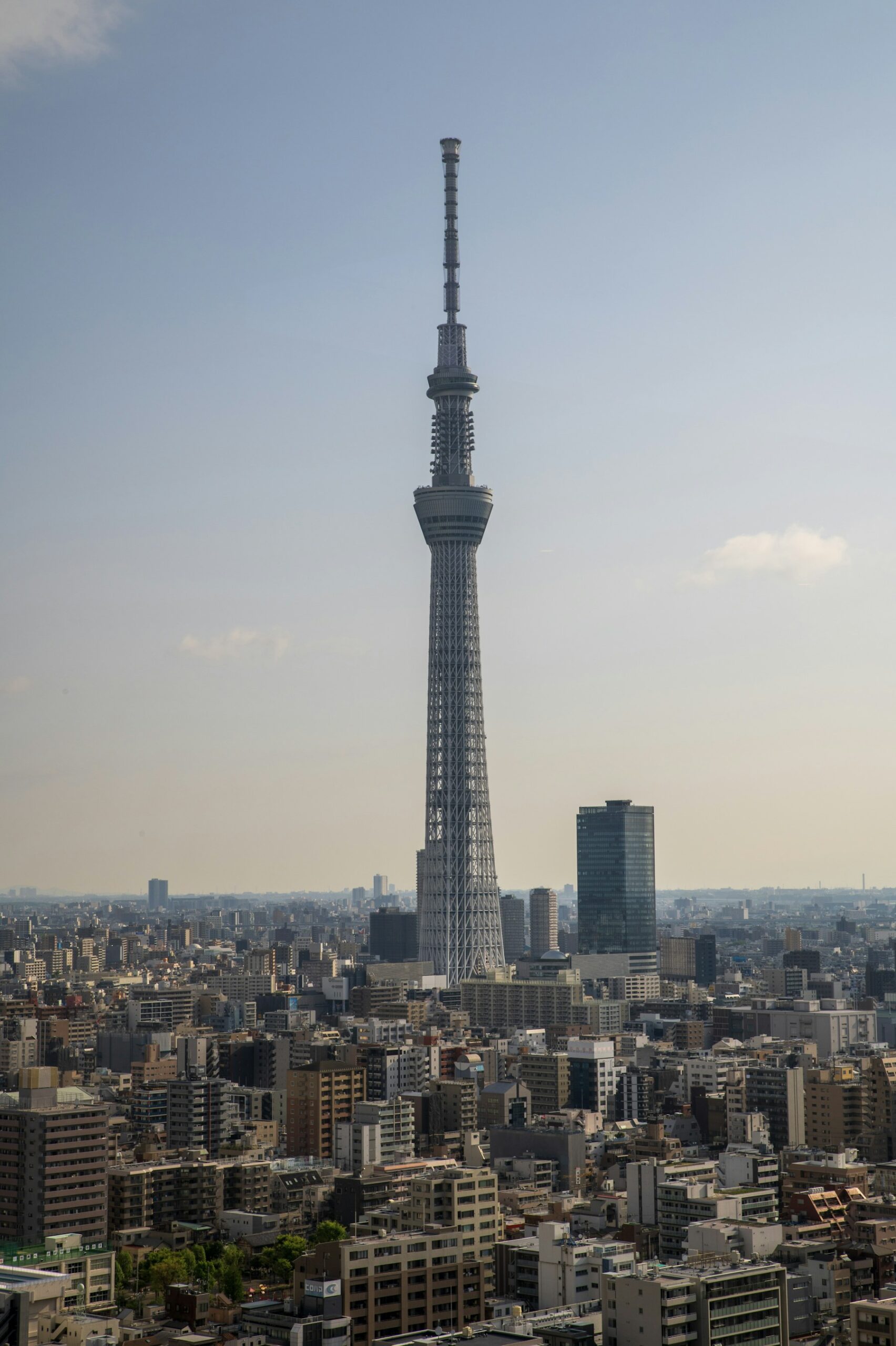
Best for: families, architecture fans, travelers combining Asakusa and Sumida, anyone who wants the highest possible view, and visits when a fully indoor deck is reassuring.
Tembo Deck or Galleria? The lower deck is enough for most visitors. Pay for the 450 m combo when height itself is the reason you are going, the forecast is very clear, or this is likely to be your only chance to visit. The extra elevation matters less on a hazy day.
Choose Tokyo Tower for value and classic Tokyo atmosphere
Tokyo Tower offers the lowest-cost straightforward visit. Its 150 m Main Deck is much lower than Skytree, but the surrounding buildings feel closer and the view has more neighborhood detail. The tower’s orange-and-white structure, Shiba Park and nearby Zojoji make the approach part of the experience—even though, naturally, you cannot see the entire tower while standing inside it.
The ¥1,500 Main Deck is a good choice for travelers who want a city view without turning it into the day’s major expense. The Top Deck Tour reaches 250 m and includes the Main Deck, timed entry and a more curated sequence. At ¥3,300 online, however, it competes directly with Shibuya Sky; choose it for the landmark’s history and central location rather than assuming it is simply a taller version of the Main Deck.
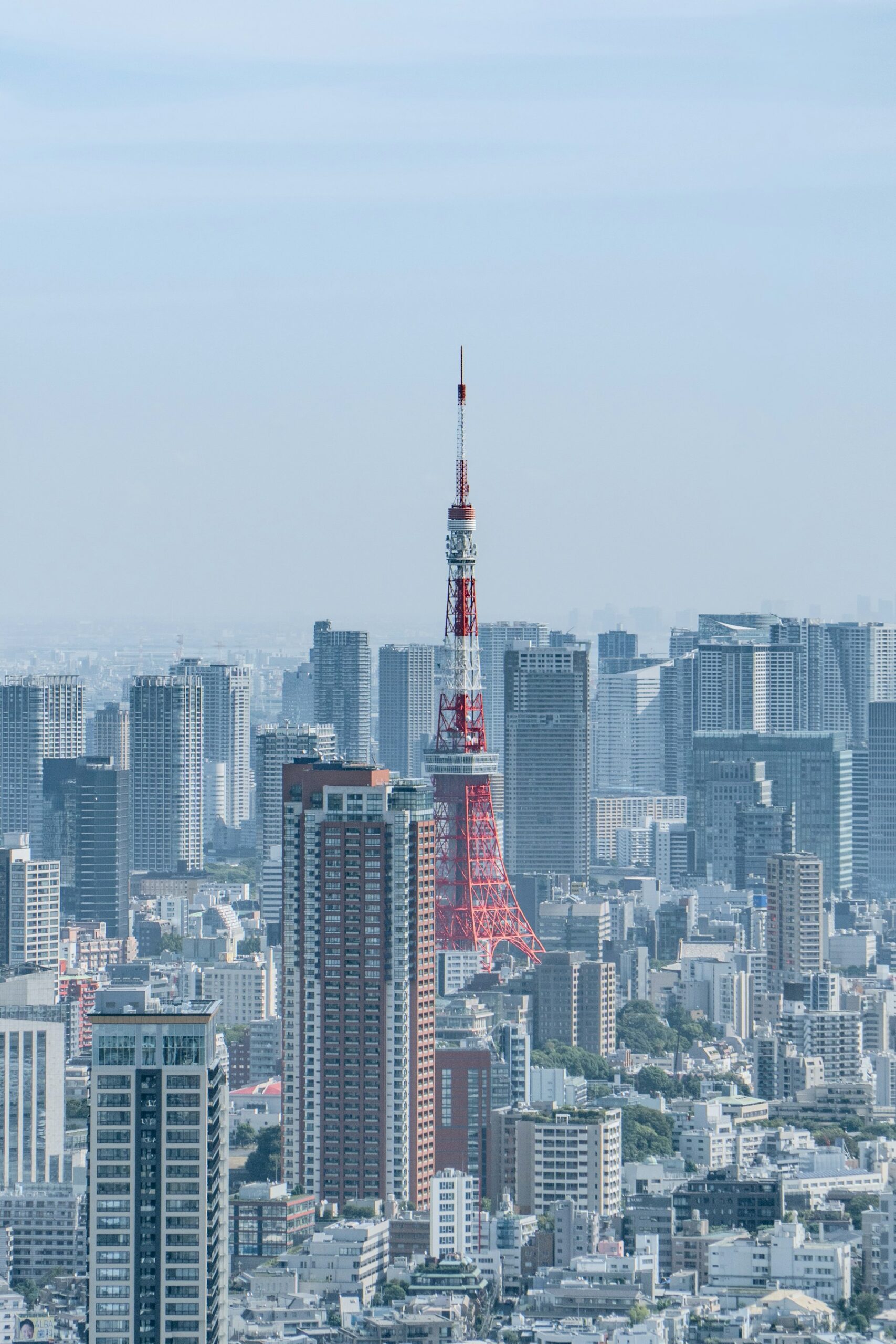
Best for: budget-conscious travelers, repeat visitors, architecture fans, families who want a simpler visit, and itineraries covering Shiba Park, Zojoji, Azabudai Hills or Roppongi.
Tokyo Tower currently opens from 9:00 a.m. to 11:00 p.m.; last admission is 10:30 p.m. for the Main Deck and the final Top Deck entry is 10:15 p.m. This later flexibility can make it easier to add after dinner than a high-demand Shibuya sunset slot.
Which deck is best at sunset or at night?
- For sunset: Shibuya Sky has the strongest outdoor atmosphere, but it requires the most advance planning and costs more from 3:00 p.m.
- For a clear daytime panorama: Skytree offers the longest sightlines. Morning can provide cleaner air and lighter crowds than sunset.
- For a spontaneous night view: Tokyo Tower’s Main Deck is the simplest value choice and remains open late.
- For bad weather: Skytree is the safest overall choice, though visibility still matters. Shibuya Sky loses much of its advantage if the rooftop closes.
Whichever you choose, check the hourly cloud, wind and visibility forecast—not only the rain icon. A perfectly dry but hazy evening can be less rewarding than a crisp morning. Arrive before your entry time, save your QR code offline and clean your phone lens before the light changes.
How to fit one viewpoint into your Tokyo itinerary
- Shibuya Sky day: Meiji Jingu → Harajuku and Omotesando → Shibuya Crossing → timed rooftop entry.
- Skytree day: Sensoji and Asakusa → walk or short train to Oshiage → Skytree before dinner.
- Tokyo Tower day: Zojoji and Shiba Park → Tokyo Tower → Azabudai Hills or Roppongi after dark.
For wider planning, use the Tokyo travel guide and build neighborhood days instead of crossing the city repeatedly. The 7-day Tokyo–Kyoto–Osaka itinerary works best with one observation deck, not all three. Families can also use the Tokyo with kids guide to balance ticketed attractions with parks and flexible time.
Should you visit more than one?
Usually, no. The opportunity cost is greater than the ticket cost: each visit needs travel time, queuing, security or lockers, and at least an hour on the deck. Two viewpoints make sense when they serve different days and different purposes—for example, a daytime Skytree visit during an Asakusa day and a sunset Shibuya Sky slot later in the trip.
If Tokyo is only one part of a longer Japan trip, spend the saved half-day exploring at street level. You may get a more distinctive experience by adding a neighborhood, meal or day trip instead. For onward planning, compare Tokyo to Kawaguchiko transport or review the Japan transportation guide.
Booking options
Affiliate disclosure: Japan Travel may earn a commission if you book through the selected link below, at no extra cost to you. Always compare the package, entry time, cancellation rules and final price with the attraction’s official site.
If official slots or bundles do not match your plans, you can browse verified Tokyo attraction listings on Klook. Use the exact attraction name, date and admission level when comparing options; a Skytree Tembo Deck ticket is not the same product as the Deck-plus-Galleria combination.
Final verdict
Book Shibuya Sky if atmosphere, rooftop photographs and a Shibuya day matter most. Book Tokyo Skytree if you want maximum height, a wide indoor panorama or an eastern Tokyo itinerary. Book Tokyo Tower if you want a classic landmark, central location and the best-value basic ticket. The right answer is the deck that fits your route and weather—not necessarily the tallest one.