Quick answer: Use trains and subway for the long part of each journey, then walk or take a bus for the final gap. Choose the bus when it is the only practical direct connection, not as the default for every attraction. From Kyoto Station, use JR for Arashiyama and Fushimi Inari; use the subway for central Kyoto and Nijo Castle; use Keihan for Gion, Kiyomizu and Fushimi Inari; and use a short bus connection for Kinkakuji. This train-first strategy is usually faster and more predictable than sitting in road traffic.
Kyoto’s map makes buses look like the obvious answer because they reach almost every famous sight. In practice, the best transport choice depends on the attraction, time of day, season and how much walking you can manage. A route that looks direct may be slow when roads and buses are crowded, especially during cherry blossom and autumn foliage seasons.
This guide uses fares and service information checked on October 29, 2026. It focuses on the traveler decision: when to use the bus, subway, JR, Keihan, Hankyu or Randen—and whether a one-day pass will actually save money.
Kyoto transport at a glance
| Trip or priority | Best starting choice | Why |
|---|---|---|
| Kyoto Station to Fushimi Inari | JR Nara Line | Inari Station is directly beside the shrine entrance |
| Kyoto Station to Arashiyama | JR Sagano Line | Avoids road traffic and reaches Saga-Arashiyama |
| Downtown to Gion | Walk or Keihan | Often simpler than joining a crowded bus |
| Nijo Castle | Tozai Subway Line | Nijojo-mae Station is close to the entrance |
| Kinkakuji | Train/subway plus bus | No railway station is directly beside the temple |
| Kiyomizu-dera | Keihan plus walking | Predictable journey; the final approach is uphill on foot |
| Lowest-stress busy-season strategy | Rail first | Less exposed to traffic and full buses |
| Several mixed rides in one day | ¥1,100 pass, if fare math works | Unlimited eligible subway and bus rides for that calendar day |
Why trains should be your Kyoto backbone
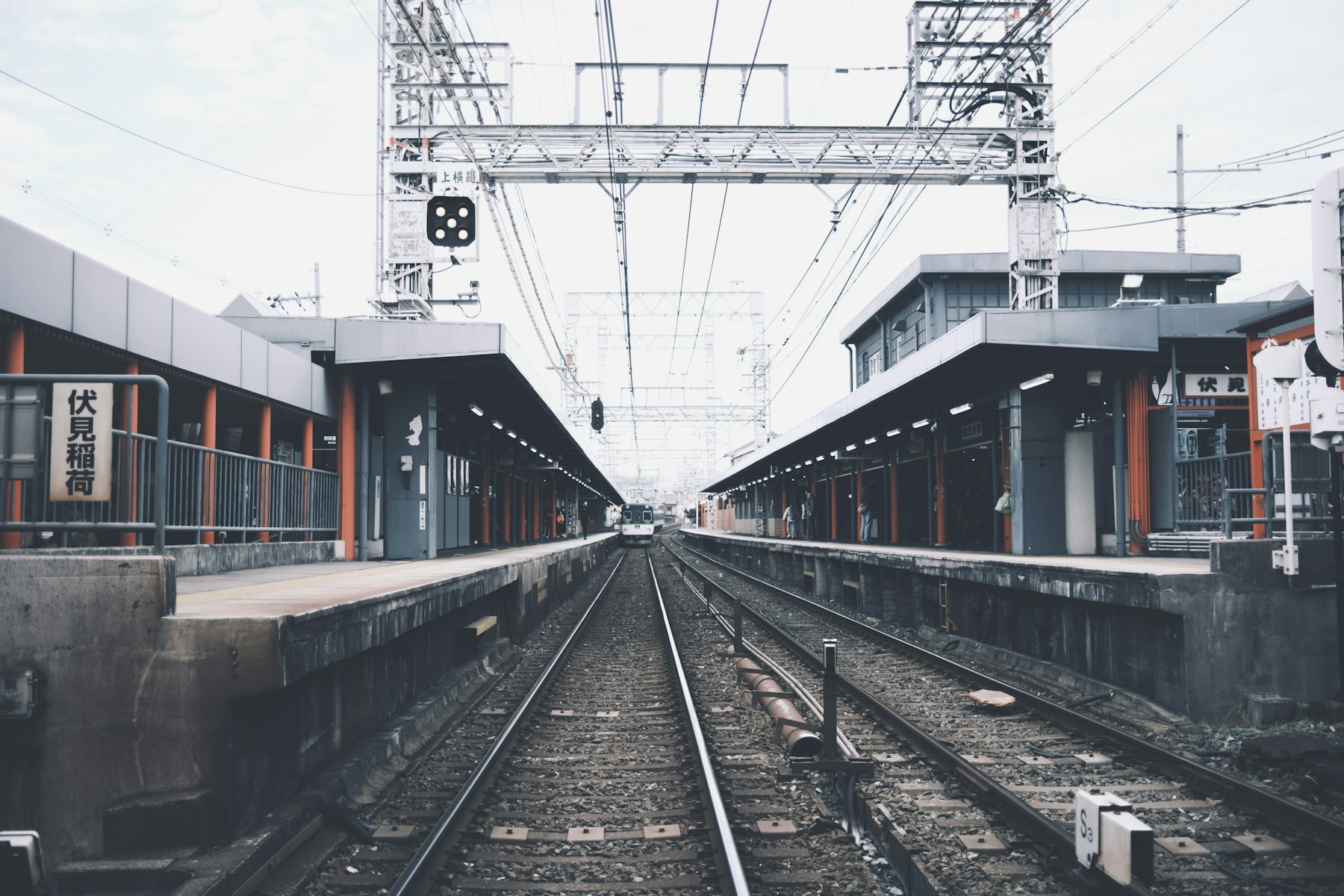
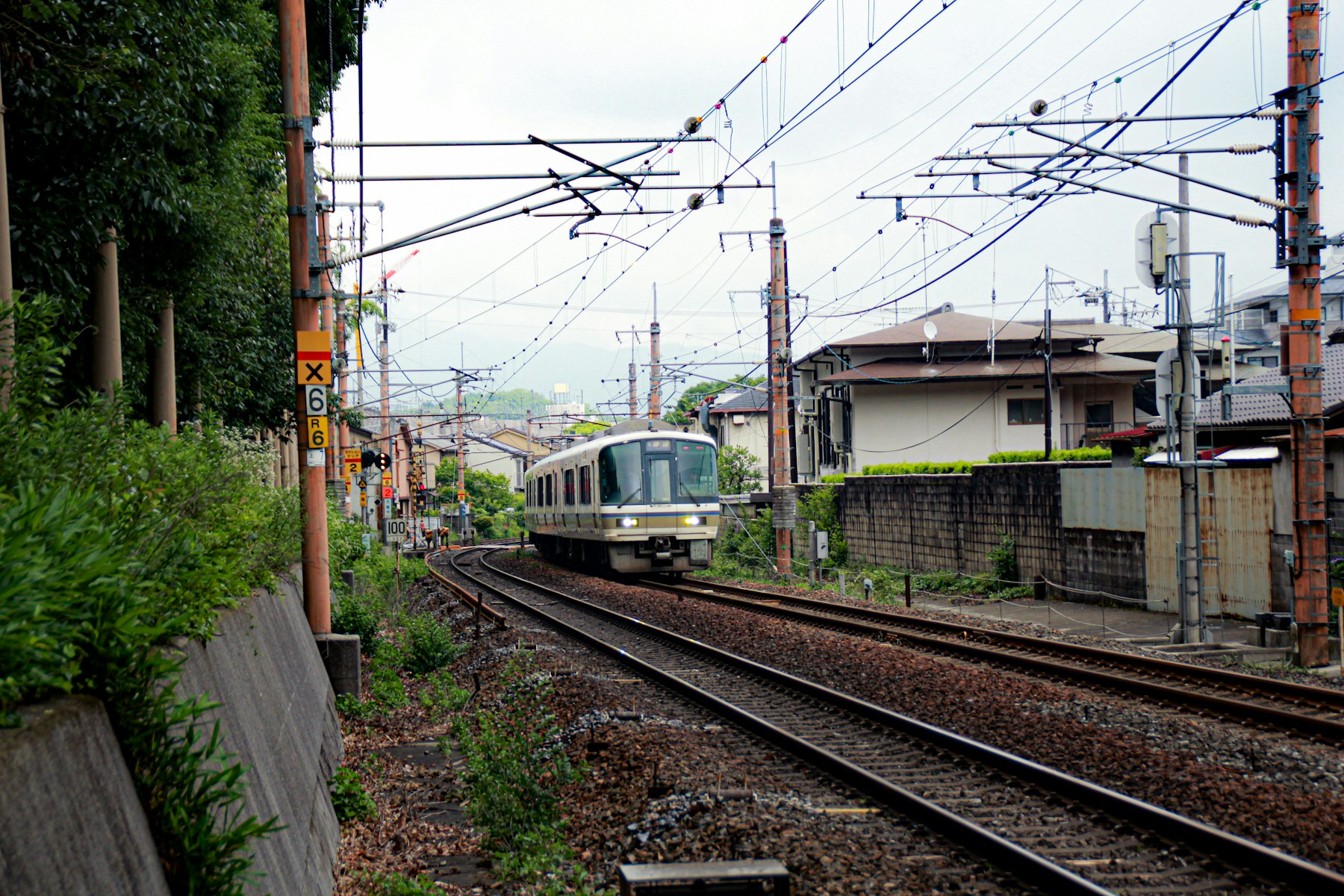
Kyoto’s rail network is divided among several operators, but that is an advantage once you stop trying to make one company handle the entire trip. JR serves Kyoto Station, Fushimi Inari, Tofukuji, Nijo, Enmachi and Saga-Arashiyama. Keihan follows the eastern side of the city and is useful for Fushimi Inari, Kiyomizu-Gojo, Gion-Shijo and Demachiyanagi. Hankyu links central Kyoto with western districts and Osaka, while Randen is useful for Arashiyama and northwest Kyoto.
Rail travel is normally more predictable than a cross-city bus because trains do not share Kyoto’s congested roads. The official Kyoto tourism guidance specifically recommends combining rail and bus, using stations such as Tofukuji, Nijo, Enmachi and Yamashina as alternative gateways instead of routing every journey through Kyoto Station.
When the subway is the best choice
Kyoto has only two municipal subway lines, but they cross at Karasuma Oike and form a useful high-speed spine. The north–south Karasuma Line serves Kyoto Station, Shijo, Karasuma Oike, Imadegawa and Kitaoji. The east–west Tozai Line serves Nijo, Nijojo-mae, Karasuma Oike, Kyoto Shiyakusho-mae, Sanjo Keihan, Higashiyama and Yamashina.
Use the subway when your hotel and destination align with these corridors, or when you can shorten a bus ride by transferring farther from Kyoto Station. It is especially useful for:
- Nijo Castle: take the Tozai Line to Nijojo-mae.
- Downtown Kyoto: Shijo and Karasuma Oike serve major shopping and dining areas.
- Higashiyama: Higashiyama Station works for Okazaki, Heian Jingu, Shoren-in and a longer walking route toward Gion.
- Kinkakuji connection: take the Karasuma Line to Kitaoji or Imadegawa, then use a shorter bus ride.
- Randen connection: take the Tozai Line to Uzumasa Tenjingawa and transfer to Randen at Randen-Tenjingawa.
Municipal subway fares start at ¥220 and increase with distance. The official subway fare table reflects the current structure effective October 1, 2025.
When the bus is still the right answer
Buses remain useful because several important temples are not beside railway stations. The correct strategy is to use them selectively: for the final connection to Kinkakuji, Ginkakuji, parts of northern Kyoto and some temple districts where a train would still leave a long walk.
A regular Kyoto City Bus ride within the flat-fare zone costs ¥230 for adults and ¥120 for children. Regular buses usually board through the rear door, exit through the front and collect payment when you get off. The Sightseeing Limited Express buses EX100 and EX101 cost ¥500 for adults; they board at the front and collect payment when you enter. Confirm the exact route and boarding procedure on the official city bus guide.
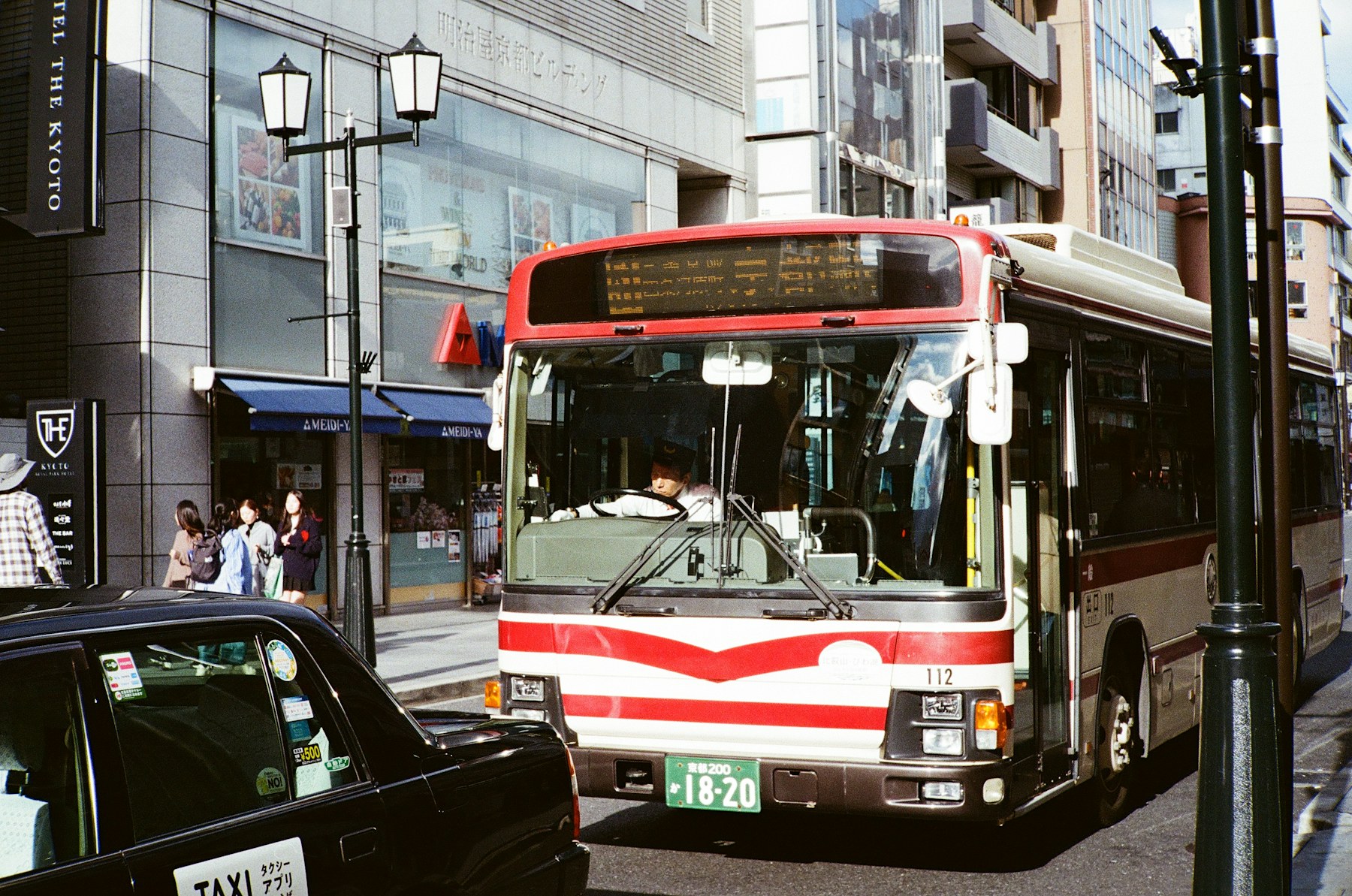
ICOCA, Suica, PASMO and other compatible transport IC cards work on Kyoto City buses. Credit and debit cards cannot be used directly at the fare box, and the Japan Rail Pass does not cover city buses. When paying cash on non-city operators, prepare the exact fare or use the onboard change machine before your stop.
Buses are most crowded during spring blossoms, autumn foliage and commuting periods. A map app may show a direct bus as the shortest route without fully accounting for traffic, boarding queues or buses that arrive too full to accept everyone. Kyoto’s official tourism site therefore advises using both rail and buses rather than relying on buses alone.
Best transport for Kyoto’s major attractions
Fushimi Inari
From Kyoto Station, take the JR Nara Line to Inari Station. From Gion or the Keihan corridor, use Keihan to Fushimi-Inari Station and walk a few minutes. A bus adds little value here because both railway stations are close to the shrine.
Arashiyama
From Kyoto Station, the JR Sagano Line to Saga-Arashiyama is the simplest choice. From downtown or western Kyoto, Hankyu and Randen may fit better. The official congestion guidance recommends rail for Arashiyama because roads and buses can be slow at busy times.
Kiyomizu-dera and Gion
For a train-first route from Kyoto Station, take JR to Tofukuji, transfer to Keihan and get off at Kiyomizu-Gojo or Gion-Shijo. Kiyomizu-dera still requires an uphill walk, but the railway section avoids uncertain road traffic. Travelers who cannot manage the walk may prefer a bus or taxi for the final section, allowing extra time at peak periods.
Kinkakuji
No railway station is directly beside the Golden Pavilion. From Kyoto Station, either take JR to Enmachi and transfer to a city bus, or take the Karasuma Subway Line toward Kitaoji or Imadegawa and complete the trip by bus. This is usually more resilient than taking one bus all the way from Kyoto Station.
Nijo Castle
Use the Tozai Subway Line to Nijojo-mae. This is one of Kyoto’s easiest rail-access attractions and rarely needs a bus unless your starting point is outside the subway corridors.
Is the ¥1,100 Subway & Bus 1-Day Pass worth it?
The Subway & Bus 1-Day Pass costs ¥1,100 for adults and ¥550 for children. It covers all Kyoto City subway and city bus lines plus eligible Kyoto Bus, Keihan Bus and West Japan JR Bus routes. It is valid for the calendar day of activation—not for 24 hours.
Do the fare math before buying:
- Four regular bus rides: 4 × ¥230 = ¥920. Pay separately.
- Five regular bus rides: 5 × ¥230 = ¥1,150. The pass saves ¥50.
- Two buses plus two short subway rides: approximately ¥900. Usually pay separately.
- Three buses plus two subway rides: typically at least ¥1,130. The pass can save money.
The pass is most useful on a busy sightseeing day with several separated stops. It is poor value for a compact Higashiyama walking day or a day dominated by JR, Keihan, Hankyu or Randen, because those railway journeys are generally outside the pass. Check the current coverage on the official Kyoto ticket page.
Is the ¥800 Subway 1-Day Pass worth it?
The subway-only pass costs ¥800 for adults. With ordinary fares starting at ¥220, four short rides cost at least ¥880, so the pass begins to make sense around four rides. It can also be convenient when your day repeatedly crosses Karasuma Oike or includes longer subway journeys.
Do not buy it for a Fushimi Inari or Arashiyama day just because those places are in Kyoto. JR, Keihan, Hankyu and Randen are separate operators, and the municipal subway does not reach either attraction directly.
Three efficient Kyoto day patterns
- Eastern Kyoto: JR to Tofukuji → Keihan to Fushimi Inari → Keihan toward Kiyomizu-Gojo or Gion-Shijo → walk through Higashiyama and Gion. Pay-as-you-go is usually simplest.
- Western Kyoto: JR to Saga-Arashiyama early → explore Arashiyama on foot → Randen toward northwest Kyoto or return by JR. A municipal pass may not help.
- Central and northwestern Kyoto: subway to Nijojo-mae → subway toward Imadegawa or Kitaoji → short bus connection to Kinkakuji. The ¥1,100 pass may work if further bus rides are planned.
Luggage, apps and practical mistakes
Do not take large suitcases onto crowded city buses. Kyoto’s official hands-free campaign asks visitors to use station storage or luggage delivery because bulky bags occupy limited space and can stop residents and other travelers from boarding. If hotel storage is unavailable, you can check nearby luggage storage options through Radical Storage.
Live maps and service alerts are especially helpful when switching among operators. If your phone will not have roaming, compare Japan eSIM options with Saily before departure.
Affiliate disclosure: Japan Travel may earn a commission from eligible bookings through the selected links above, at no extra cost to you. They are included only where storage or mobile data directly supports this transport plan.
- Do not assume Kyoto Station is the best transfer point for every journey.
- Do not choose a direct bus solely because it has fewer transfers; compare likely road congestion.
- Do not buy a city pass before checking whether your railway is actually covered.
- Do not plan Arashiyama, Kinkakuji, Kiyomizu-dera and Fushimi Inari as one frantic day.
- Save station names in Japanese and keep your hotel address available offline.
How this fits your wider Kyoto plan
Start with the Kyoto travel guide, then group sights by area rather than fame. Your hotel location matters too: the Kyoto accommodation guide explains the tradeoff between Kyoto Station, downtown and Gion/Higashiyama. Families should use the slower pacing in the Kyoto with kids guide.
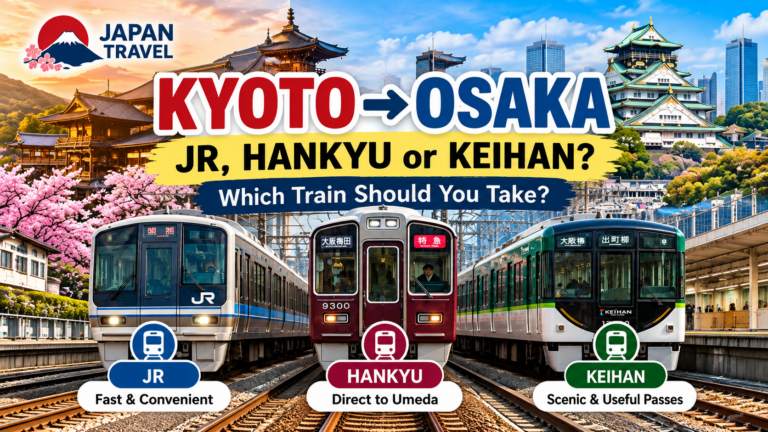
For intercity travel, see Kyoto to Osaka by JR, Hankyu or Keihan, the Tokyo to Kyoto Shinkansen guide, and the broader IC card guide.
Final verdict
For most first-time visitors, the best way to get around Kyoto is rail first, bus second. Use JR, Keihan, Hankyu, Randen and the subway to cover distance without road delays; walk or use a short bus connection for the final approach. Buy the ¥1,100 mixed pass only when your planned eligible rides exceed its price. This method takes slightly more route planning, but it usually gives you more sightseeing time and fewer crowded-bus surprises.