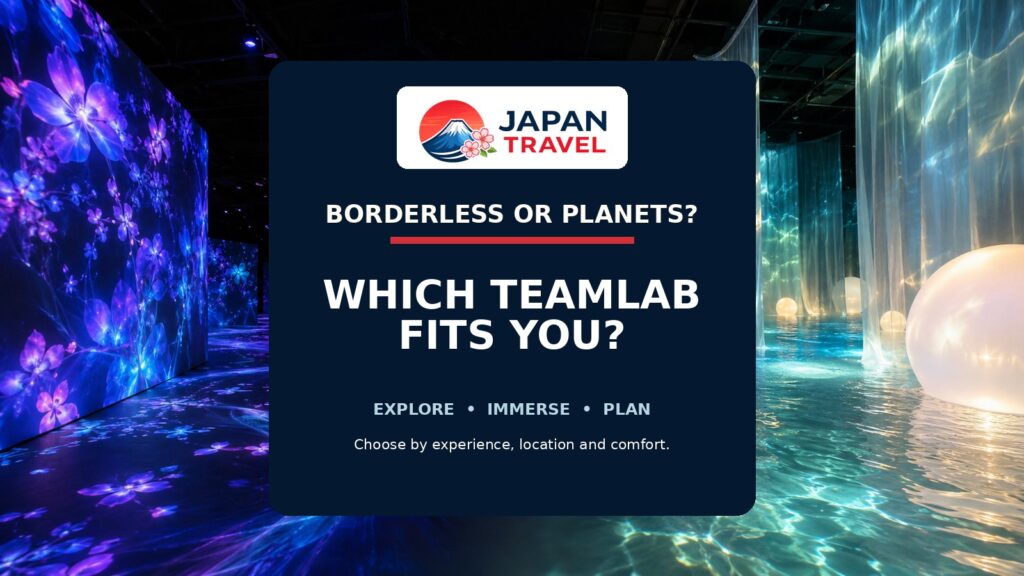
Choose teamLab Borderless if you want to wander through a large, mapless digital-art world at your own pace. Choose teamLab Planets if you want a shorter, more physical experience built around bare feet, shallow water, mirrors and full-body immersion.
Both are excellent, but they solve different traveler needs. Borderless is the stronger all-round choice for most first-time visitors, repeat exploration and central-Tokyo itineraries. Planets is better when the tactile water experience is the reason you are going, or when Toyosu, Odaiba, Ginza or Tokyo Bay already fits your day.
Affiliate disclosure: Japan Travel may earn a commission from qualifying bookings at no extra cost to you. We only recommend booking links that match the attraction and traveler decision discussed.
You can compare dated Tokyo attraction availability on Klook. The official Borderless site identifies Klook as an official sales channel. Always check the exact product, date, entry time and change conditions before paying.
Borderless vs Planets at a glance
| Decision | teamLab Borderless | teamLab Planets |
|---|---|---|
| Core experience | Mapless, interconnected rooms; artworks move across boundaries | Route-like, full-body immersion through water, mirrors and gardens |
| Location | Azabudai Hills, near Kamiyacho | Toyosu, near Shin-Toyosu and Toyosu Market |
| Adult price checked Nov. 21, 2026 | From ¥3,400 online | From ¥3,800 online |
| Footwear | Keep shoes on | Barefoot; remove socks and tights |
| Water | No required water walk | Some water reaches adult knee height |
| Pace | Open-ended exploration | More directed progression |
| Best for | Art discovery, repeat viewing, central sightseeing | Sensory novelty, physical participation, Toyosu days |
| Young children | Easier clothing logistics, but dark and uneven in places | Fun but needs dry clothes, close supervision and stroller planning |
Prices use dynamic pricing and can change by date. The figures above are starting prices displayed by the official ticket pages when this comparison was checked, not a promise that every time slot will cost the same.
The biggest difference: exploring versus immersing
Borderless feels like discovery
The official description calls Borderless “a museum without a map.” Artworks flow between rooms, overlap and change as people move through them. There is no single correct route, so two visitors can enter together and notice different things. The experience rewards curiosity: turn down a darker corridor, return to a room later and an artwork may have changed.
This freedom is Borderless’s main strength and its main drawback. Travelers who enjoy wandering can spend a generous part of the day inside. Travelers who want a checklist, fixed sequence or obvious finish may worry that they missed something. There are no conventional room maps or artwork captions; the teamLab app can identify nearby works and provide concepts.
Planets feels like participation
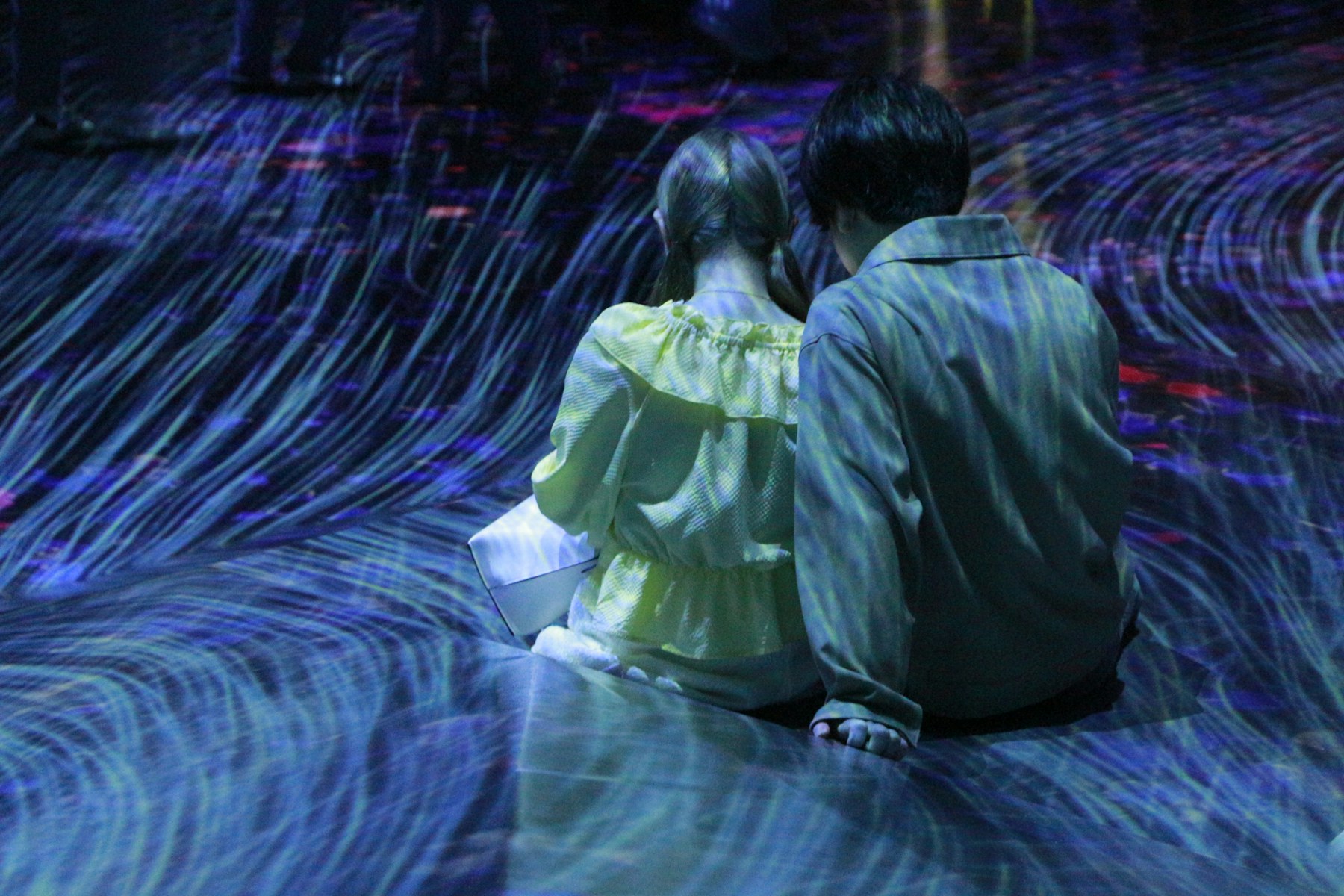
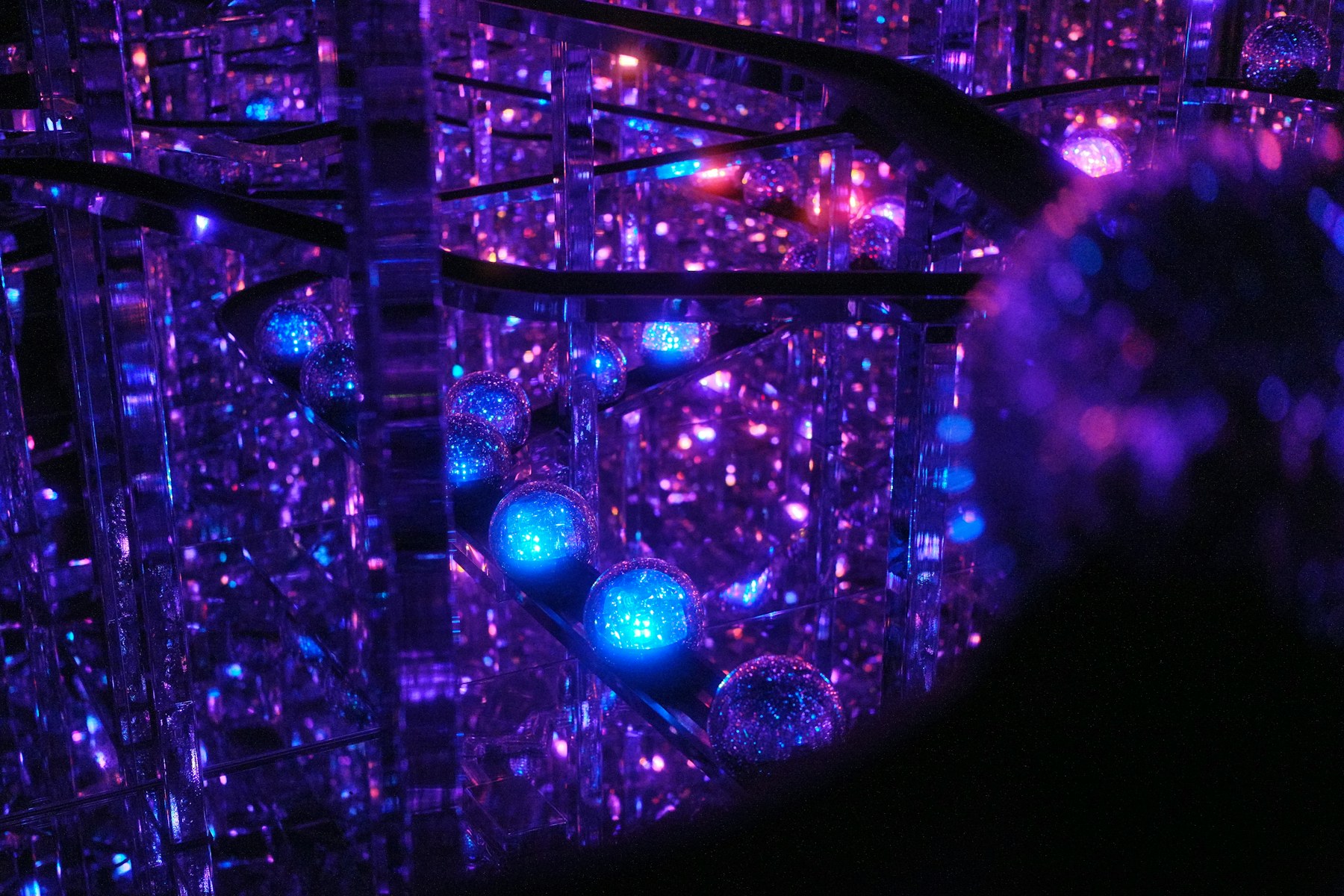
Planets asks you to experience art with your body. You remove shoes and socks, walk through water, cross soft or unstable surfaces and enter mirrored spaces where your movement becomes part of the installation. Its sequence is easier to understand than Borderless: the visit carries you forward rather than encouraging endless branching.
That structure makes Planets memorable and easy to describe, but less flexible. Water can reach adult knee height. A mirrored floor can reveal more than intended under skirts or wide trousers, although free rental shorts are available. Visitors who dislike wet feet, darkness, confined spaces or strong sensory stimulation should read the official warnings before booking.
Which location fits your Tokyo itinerary?
Choose Borderless for central Tokyo
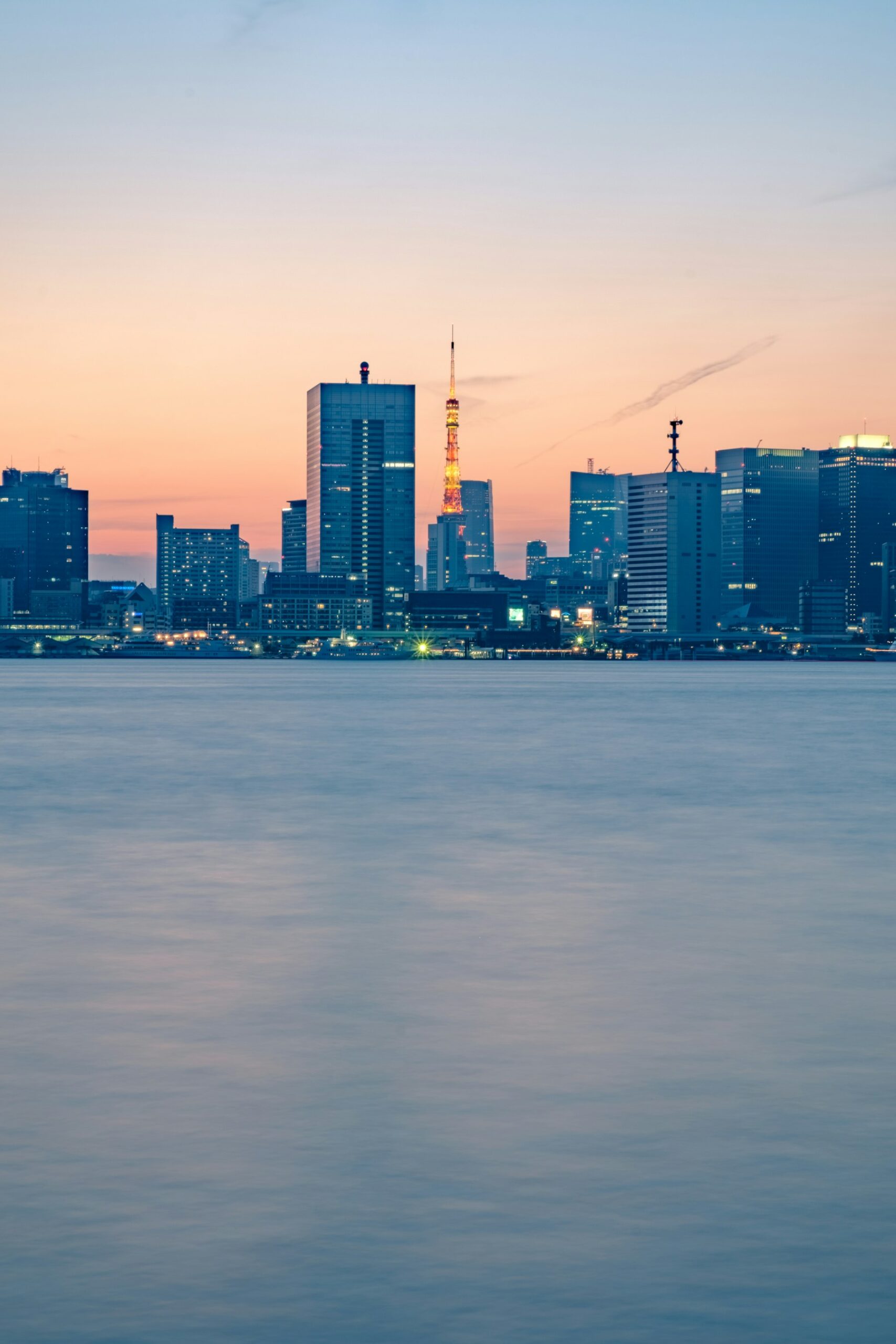
Borderless is in Azabudai Hills Garden Plaza B, about two minutes from Kamiyacho Station Exit 5 or six minutes from Roppongi-Itchome Station Exit 4. The underground connections make it useful in poor weather. It combines naturally with Tokyo Tower, Roppongi, Toranomon, Ginza or an evening in central Tokyo.
If you are comparing city views on the same day, use our Shibuya Sky, Skytree and Tokyo Tower guide. Avoid stacking too many timed attractions: Borderless is better when you do not have to rush toward a reservation across the city.
Choose Planets for Toyosu and Tokyo Bay
Planets is three minutes on foot from Shin-Toyosu Station, ten minutes from Toyosu Station and about five minutes from Shijomae Station and Toyosu Market. It pairs well with Toyosu Market, waterfront walks, Odaiba or a Tokyo Bay evening. The official access page also lists a paid shuttle between Ginza Six and Planets.
From Tokyo Station, the usual rail route runs through Yurakucho and Toyosu. From Shinjuku or western Tokyo, the journey is more involved. Check the hotel-to-attraction route before choosing solely from photos. Our Tokyo Subway Ticket guide explains where metro coverage helps and where the Yurikamome leg requires separate consideration.
Which is better with children?
Borderless is usually the simpler choice for families who want fewer clothing and water logistics. Children can follow moving projections and revisit favorite rooms without changing clothes. However, the museum remains dark, has unstable footing and low ceilings in places, and strollers must be left in the luggage room. The official site says one adult is required for every five children at elementary-school age or below.
Planets can be the bigger hit for children who love sensory play. It also demands closer preparation. The official guidance recommends spare clothes because children may get wet, requires one adult for every three children, and does not allow strollers inside. Baby carriers are accepted, and detour routes are available for people who cannot enter a particular space.
Neither is a hands-off indoor playground. Adults must keep children close in darkness, water and mirrored rooms. For realistic pacing and hotel advice, see our Tokyo with kids guide.
Accessibility and sensory considerations
Both venues permit wheelchair entry, but neither promises access to every artwork. Borderless uses elevators and allows wheelchairs, yet some installations are impassable for safety. Planets offers accessible toilets and special routes; some water artworks require transfer to a venue wheelchair, while other areas cannot be entered by wheelchair users.
Both include darkness, flashing light, sound and mirrored surfaces. Planets adds water, bare feet and more obvious changes in balance and texture. Borderless has more route uncertainty and can feel disorienting. If anyone in your group has mobility, sensory, pregnancy or health concerns, read the current official accessibility notes rather than assuming the two venues work the same way.
Tickets, prices and booking strategy
As checked on November 21, 2026, Borderless adult entrance passes start at ¥3,400 online; on-site purchase adds ¥200 when inventory remains. The official Planets ticket page currently lists adult entrance passes from ¥3,800. Both use date- and time-specific inventory and can sell out. Children aged three and under enter free at both, while the youth price bands differ.
For direct official-site purchases, both venues generally allow up to three date or time changes subject to availability and deadlines. Standard entrance-pass changes must be completed no later than two hours before the reserved start. Tickets bought through another seller follow that seller’s terms, so compare flexibility as well as price.
Reserve a weekend, holiday or preferred morning slot once your neighborhood plan is stable. Our Tokyo attractions booking guide shows how teamLab fits alongside harder-to-secure tickets such as Ghibli Museum, sumo and peak-date Disney.
Can you visit both?
You can, but most first-time travelers should not put both on the same day. The venues are in different districts and each deserves enough time to feel immersive. Scheduling them back-to-back turns the comparison into a commute and makes the second experience feel less distinctive.
Visit both only if digital art is a major trip theme or you have several Tokyo days. Put Borderless on a Roppongi–Azabudai–Tokyo Tower day and Planets on a Toyosu–Odaiba–Tokyo Bay day. Start with our Tokyo travel guide and where to stay in Tokyo guide before fixing the sequence.
What to wear and bring
- For Borderless: comfortable closed or secure shoes, a light layer and minimal baggage. Free lockers are available, and items over 50 cm are restricted.
- For Planets: trousers or shorts that can roll above the knee, easy-to-remove shoes and dry clothing for young children. Avoid tights unless you are comfortable removing them.
- For both: a charged phone with the ticket ready, but no flash, tripod or long selfie stick. Re-entry is not allowed.
- For airport days: do not carry large luggage to either museum. Compare our Narita transfer guide, Haneda transfer guide and Japan luggage strategy.
Final decision
Pick Borderless for a broader, central and more exploratory museum experience. It is the safest recommendation when your group wants digital art without required water, or when you want an attraction that rewards a slower visit.
Pick Planets for a more physical, route-based and sensory memory. It wins when walking barefoot through water and mirrored spaces is the specific experience you want, and Toyosu fits the rest of your day.
If you remain undecided, choose by geography: Borderless for central Tokyo, Planets for Tokyo Bay. That simple rule usually produces the better itinerary.
Prices, access details and visitor rules were checked against the official teamLab Borderless and teamLab Planets pages on November 21, 2026. Dynamic prices, hours, artworks and operating rules can change; reconfirm the official booking page before purchase.