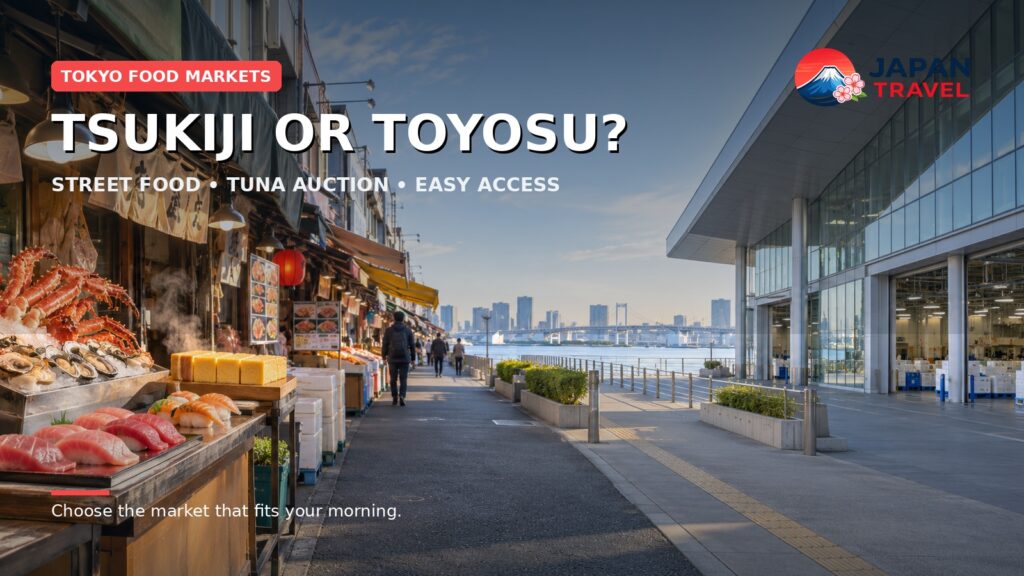
Choose Tsukiji if you want Tokyo’s most atmospheric, snack-by-snack market morning. Choose Toyosu if the working wholesale market, tuna auction, and a structured indoor visit matter more. For most first-time visitors with only one market slot, Tsukiji is the easier and more varied choice. Toyosu wins for a specific auction-focused plan or a day built around Tokyo Bay.
Details checked on November 24, 2026. Market days, individual shop hours, and tuna-auction application dates can change, so verify the official calendars linked below before an early start.
Affiliate disclosure: This guide contains a genuinely relevant Klook link. If you book through it, Japan Travel may earn a commission at no extra cost to you. Editorial recommendations remain independent.
Tsukiji vs Toyosu at a glance
| Decision | Tsukiji Outer Market | Toyosu Market |
|---|---|---|
| Best for | Street food, browsing, old-market atmosphere | Wholesale operations, tuna auction, Tokyo Bay plans |
| Ideal arrival | About 8:30–10:00 | Very early for auctions; early morning for restaurants |
| Public visiting pattern | Many shops are best roughly 9:00–14:00, but hours vary | Visitor course 5:00–17:00 on market days; businesses set their own hours |
| Atmosphere | Dense, lively, traditional lanes | Modern, organized, mostly indoor viewing routes |
| Access | Walkable from Tsukiji, Tsukijishijo, or Higashi-ginza stations | Connected to Shijo-mae Station on the Yurikamome Line |
| Biggest mistake | Expecting to see the wholesale tuna auction here | Arriving late and finding the market action finished |
First, clear up the common confusion
“Tsukiji Market” now means the Tsukiji Outer Market: the surrounding network of specialist food shops, produce sellers, knife stores, snack stalls, and small restaurants. The central wholesale market and its famous tuna auctions moved to Toyosu in 2018. Tsukiji did not disappear; it simply became a different kind of traveler experience.
Toyosu is the active wholesale market. Visitors do not wander across the trading floor. Instead, public passages and observation windows allow you to see parts of the market without interrupting the work. That distinction is the heart of this decision: Tsukiji is an immersive food neighborhood, while Toyosu is a working market observed from designed visitor spaces.
Choose Tsukiji for food variety and atmosphere
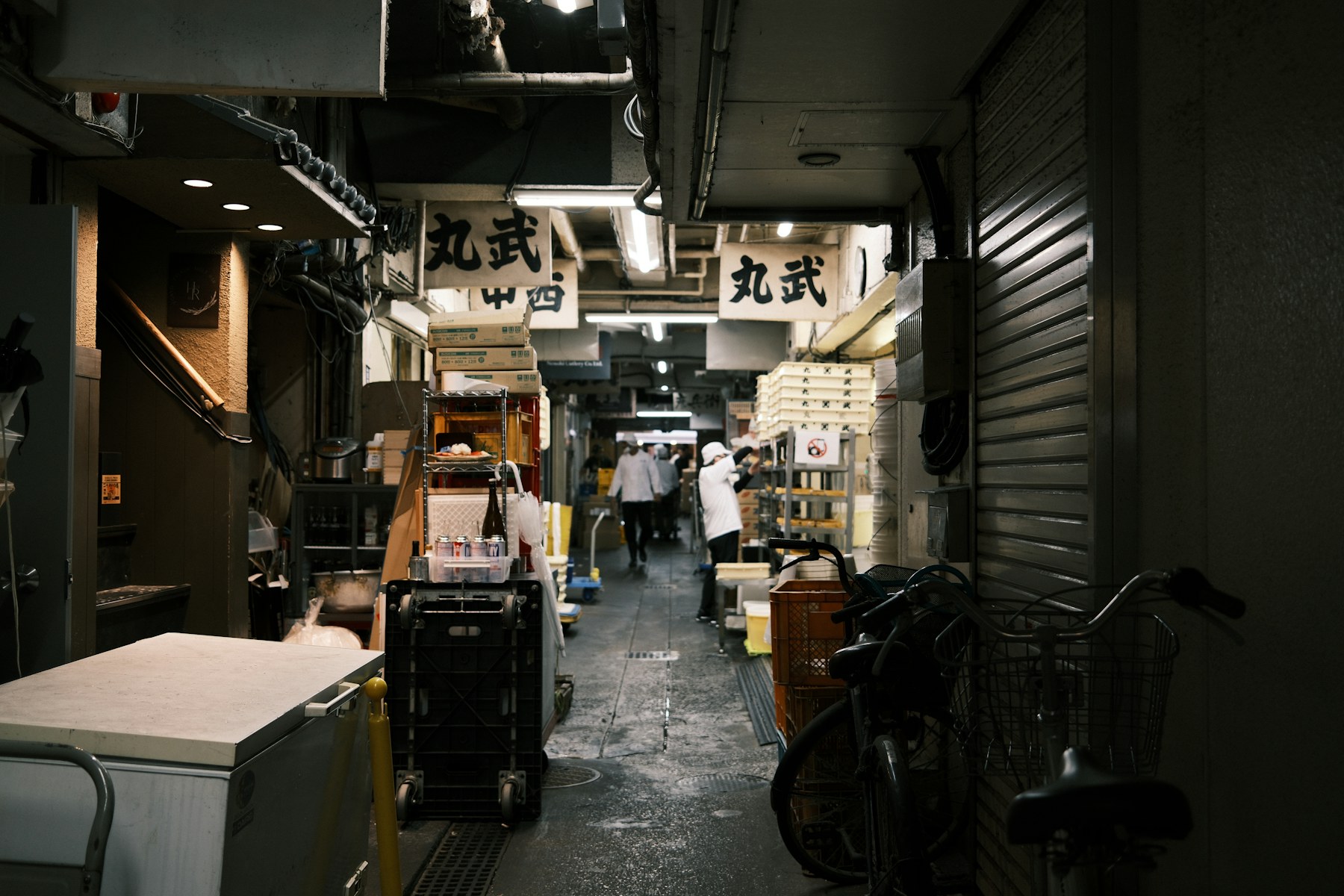
Tsukiji works best when the experience matters as much as any single dish. Its compact lanes create constant choice: grilled seafood, sashimi, tamagoyaki, dried bonito, tea, fruit, pickles, rice bowls, kitchen tools, and tiny counters where you may sit shoulder-to-shoulder with other diners. You can follow your appetite rather than a rigid route.
The official Tsukiji Outer Market guidance says general public shopping is most practical from about 9:00 to 14:00, although each business sets its own schedule. Many stores close on Sundays, public holidays, and some Wednesdays. Arriving around 8:30 or 9:00 usually gives you energy without the worst late-morning compression. Check the official Tsukiji Outer Market visitor information and its current calendar before going.
- Best for first-time food travelers: the range makes it easy to sample several small things.
- Best for a central Tokyo itinerary: Tsukiji pairs naturally with Ginza, Hamarikyu Gardens, or an onward subway trip.
- Best for market photography: the close lanes provide color and texture, provided you respect shop rules and do not block trade.
- Best if your morning starts later: it remains rewarding after Toyosu’s most active wholesale period has passed.
Tsukiji’s practical drawbacks
The market is tight and can feel crowded. Large suitcases, bulky strollers, and groups stopping in the middle of a lane create friction. The official guidance notes limited locker space, wet or slippery surfaces, and that some shops still prefer cash. Bring a small bag, wear secure closed-toe shoes, carry some yen, and eat beside the shop that sold you the food rather than walking through the lanes with it.
If you are moving between hotels that day, use the strategies in our Japan luggage forwarding and storage guide. Tsukiji is much better without a suitcase.
Choose Toyosu for the tuna auction and working-market context
Toyosu is the better answer if your priority is seeing where Tokyo’s large-scale seafood trading happens. The buildings are modern, the visitor circulation is controlled, and the experience is more interpretive than spontaneous. You look through observation windows, follow elevated passages, and eat at restaurants serving workers and visitors around the market complex.
The Tokyo Metropolitan Government lists the visitor course as open 5:00–17:00 on market days, excluding Sundays, public holidays, and other scheduled closures. That does not mean every shop or restaurant stays open until 17:00. Market businesses set their own hours, and the most compelling activity is early. Always check the official Toyosu Market visitor page and business calendar.
How tuna-auction viewing works
There are two distinct viewing experiences. The second-floor visitor passage is available on open market days and does not require the lower-deck lottery, though distance and glass mean the view is less immersive. The lower observation deck is closer to the trading floor and uses a free monthly advance lottery. Successful applicants must arrive very early—official instructions commonly set a meeting time around 5:30—and bring the required identification.
If the lower deck is important, do not improvise on the morning. Read the current rules and apply through the official Toyosu tuna-auction application site for your travel month. The application window and results date change monthly.
- Best for market enthusiasts: you see the scale and logistics of Tokyo’s wholesale food system.
- Best for an auction goal: this is the correct market, not Tsukiji.
- Best in bad weather: much of the visitor route is indoors and orderly.
- Best with Tokyo Bay attractions: add teamLab Planets, Odaiba, or the waterfront rather than backtracking across central Tokyo.
Which market has better food?
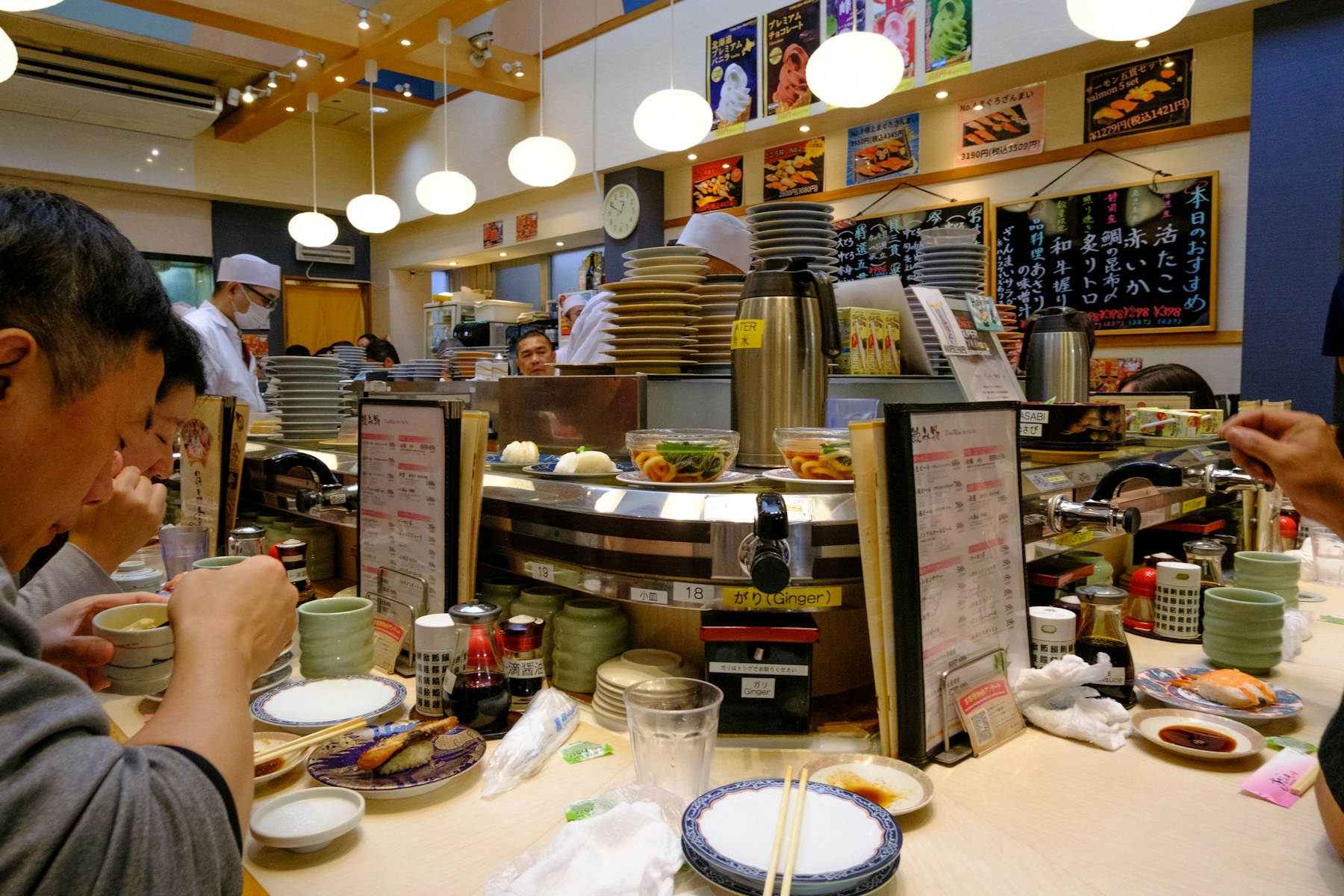
There is no honest universal winner because the formats differ. Tsukiji offers the broader browsing experience. You can compare snacks, watch food being prepared, and build a tasting walk without committing to one restaurant. It is more forgiving if your group wants different things.
Toyosu is stronger for a deliberate early breakfast or lunch. Its market restaurants are a destination in their own right, but queues can be substantial and some businesses finish early. Research two or three acceptable options rather than betting the entire morning on one famous counter.
If you want a broader primer before choosing what to order, see our guide to Japanese foods beyond sushi and ramen. For tours and bookable Tokyo experiences, you can also browse verified Tokyo activities on Klook; check each listing’s exact meeting point, inclusions, and cancellation terms before booking.
Which market is easier to reach?
Tsukiji is easier for most itineraries. The Outer Market is roughly a one-minute walk from Tsukiji Station on the Hibiya Line or Tsukijishijo Station on the Oedo Line, and about three minutes from Higashi-ginza. It is also easy to fold into a day centered on Ginza or eastern central Tokyo. Our Tokyo subway ticket decision guide can help if you are comparing transport options.
Toyosu takes more intention. Shijo-mae Station on the Yurikamome Line connects by pedestrian deck to the market complex. The elevated ride is scenic, but it is not covered by every subway-only pass. Budget extra transfer time—especially before dawn, when service frequency and your hotel’s starting point matter.
Hotel location can change the answer. Travelers staying in Ginza, Shimbashi, or near the eastern side of central Tokyo have an easier start for either market than those based far west. Compare bases in our where to stay in Tokyo guide.
Families, accessibility, and luggage
Toyosu’s wider indoor passages, lifts, and controlled circulation are generally easier with mobility needs or a stroller. Tsukiji is more sensory and flexible, which many children enjoy, but its narrow, busy lanes demand closer supervision. Very early auction timing can also be punishing for young children.
For family pacing, use our full Tokyo with kids guide. In either market, leave large luggage at your hotel or a station locker. Neither experience improves when you are steering a suitcase through breakfast crowds.
Can you visit Tsukiji and Toyosu on the same morning?
Yes, but only if markets are a major interest. Start at Toyosu before or around sunrise, see the visitor passages or your booked auction session, eat an early breakfast, then continue to Tsukiji before late morning. The trip between them is manageable, but you will repeat a seafood-heavy experience and sacrifice time elsewhere.
For most travelers, one market plus a contrasting attraction creates a better day:
- Tsukiji pairing: market breakfast, Hamarikyu Gardens, Ginza, then central Tokyo sightseeing.
- Toyosu pairing: early market visit, Toyosu Senkyaku Banrai, then teamLab Planets or Odaiba.
If digital art is part of that Tokyo Bay day, compare the two museums in our teamLab Borderless or Planets decision guide. For other time-sensitive bookings, use our guide to Tokyo attractions worth reserving ahead.
The final decision
Pick Tsukiji if this is your first Tokyo market, you want several small tastes, your day centers on Ginza or central Tokyo, or you prefer lively street-level atmosphere. It is the more flexible recommendation for a broad range of travelers.
Pick Toyosu if the tuna auction is the reason you are going, you want to understand the working wholesale market, you value an organized indoor route, or you are already building a Toyosu–Odaiba itinerary.
Whichever you choose, go early, check the official calendar, travel light, and avoid treating “market hours” as one universal schedule. The best visit happens before individual businesses start closing—and before the morning crowds make the decision for you.
Plan the rest of your Tokyo arrival
Use our Tokyo travel guide for neighborhood planning. If this market morning follows an airport arrival, compare the best ways from Haneda Airport to Tokyo or the Narita train, bus, and transfer options before committing to a pre-dawn start.