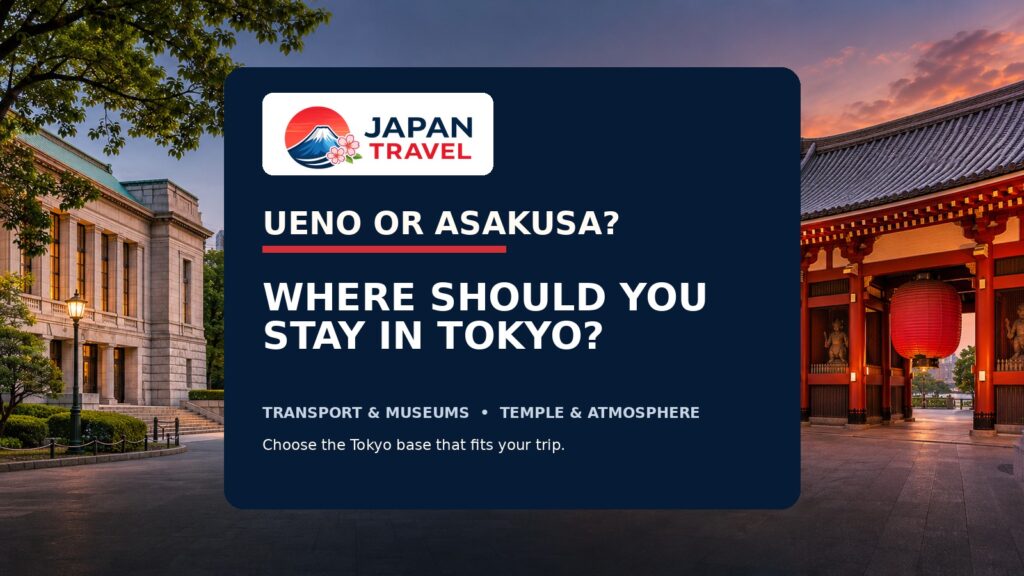
Choose Ueno if transport convenience, Narita Airport access, museums and easy day trips matter most. Choose Asakusa if you want Sensoji on your doorstep, a more traditional Tokyo atmosphere and direct Tobu trains toward Nikko. For most first-time visitors building a busy itinerary, Ueno is the slightly easier all-round base. Asakusa is the more memorable choice when the neighborhood itself is part of the trip.
This is not a contest between a “good” and “bad” area. Both are in Tokyo’s historic northeast and both can work beautifully. The real decision is whether you would rather optimize every departure or enjoy quieter temple streets before and after the daytime crowds.
Affiliate disclosure: This guide contains hotel links. If you book through them, Japan Travel may earn a commission at no extra cost to you. We recommend only services that genuinely match this stay-planning decision.
Ueno vs Asakusa at a glance
| Decision factor | Ueno | Asakusa |
|---|---|---|
| Best overall for | Transport, museums, practical sightseeing | Atmosphere, Sensoji, traditional Tokyo |
| Narita Airport | Winner: Keisei Ueno and the Skyliner | Some direct Access Express services; check the timetable |
| Haneda Airport | Usually one transfer | Slight edge: through-services via the Asakusa/Keikyu lines |
| Rail network | Winner: JR, metro and northbound Shinkansen | Ginza, Toei Asakusa and Tobu lines |
| Neighborhood feel | Busy, mixed, convenient | Winner: historic and atmospheric |
| Families | Museums, park, zoo, easier connections | Compact sightseeing, river walks |
| Evenings | Ameyoko, casual restaurants and more bustle | Quieter after sightseeing hours |
| Best special day trip | Northbound JR and Shinkansen trips | Winner for Nikko: Tobu limited express |
If this is your first Tokyo stay, also compare our broader guide to the best areas to stay in Tokyo. Travelers choosing between the city’s bigger nightlife hubs should read Shinjuku vs Shibuya.
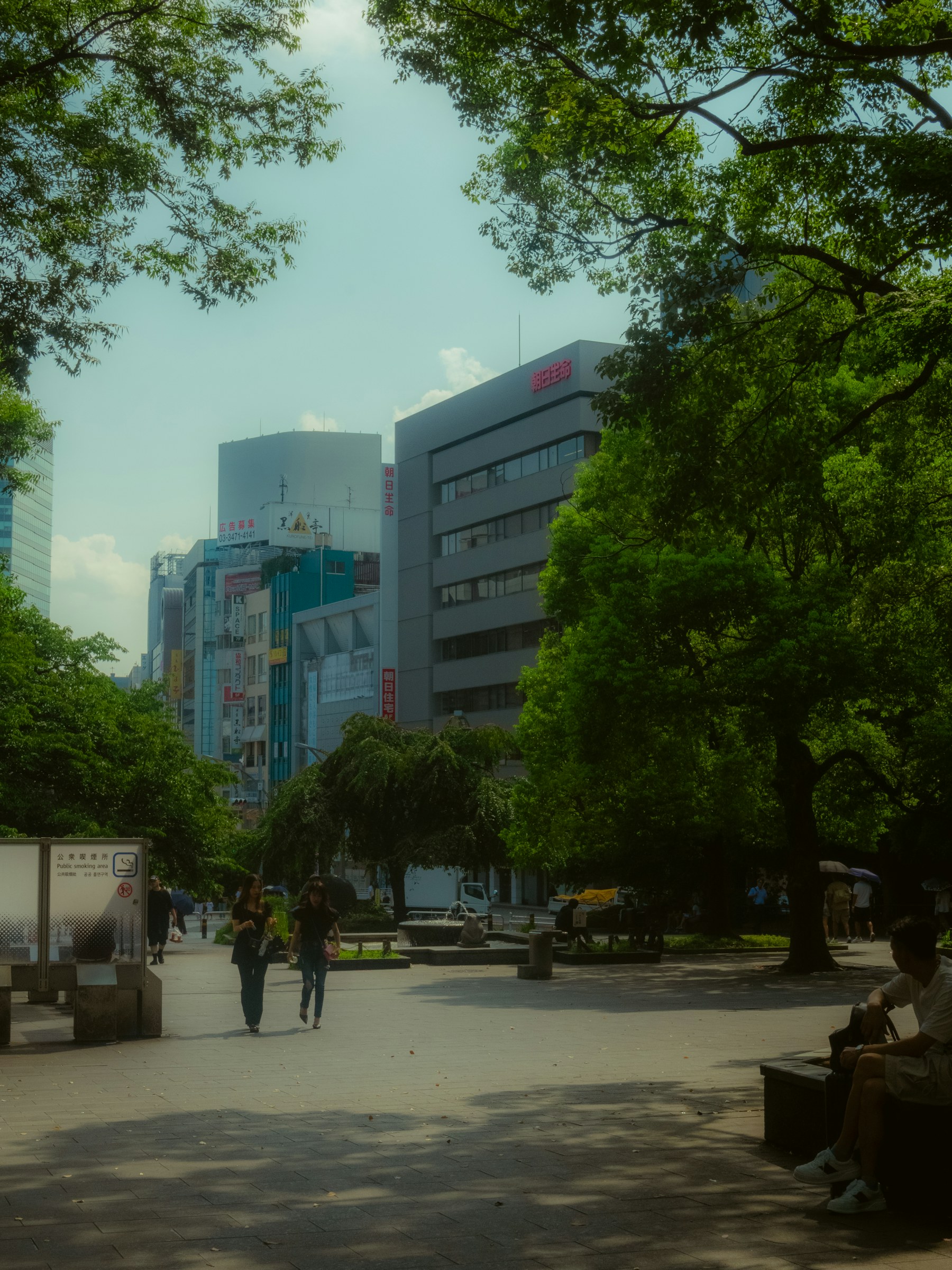
Stay in Ueno for transport and an efficient itinerary
Ueno’s great advantage is not one attraction; it is how many useful lines meet here. JR Ueno Station serves the Yamanote and Keihin-Tohoku lines, the Ueno-Tokyo corridor, Joban, Utsunomiya and Takasaki services, plus northbound Tohoku, Hokkaido, Akita, Yamagata, Joetsu and Hokuriku Shinkansen trains. The Tokyo Metro Ginza and Hibiya lines fill in many central-city journeys. Nearby Keisei Ueno is the natural arrival point for the Skyliner from Narita.
That makes Ueno a strong base if your itinerary mixes central Tokyo with several longer trips. You can reach Tokyo Station, Akihabara and Ginza without turning each departure into a puzzle. If airport logistics are a major factor, compare our detailed guides to Narita Airport transfers and Haneda Airport transfers.
What Ueno feels like
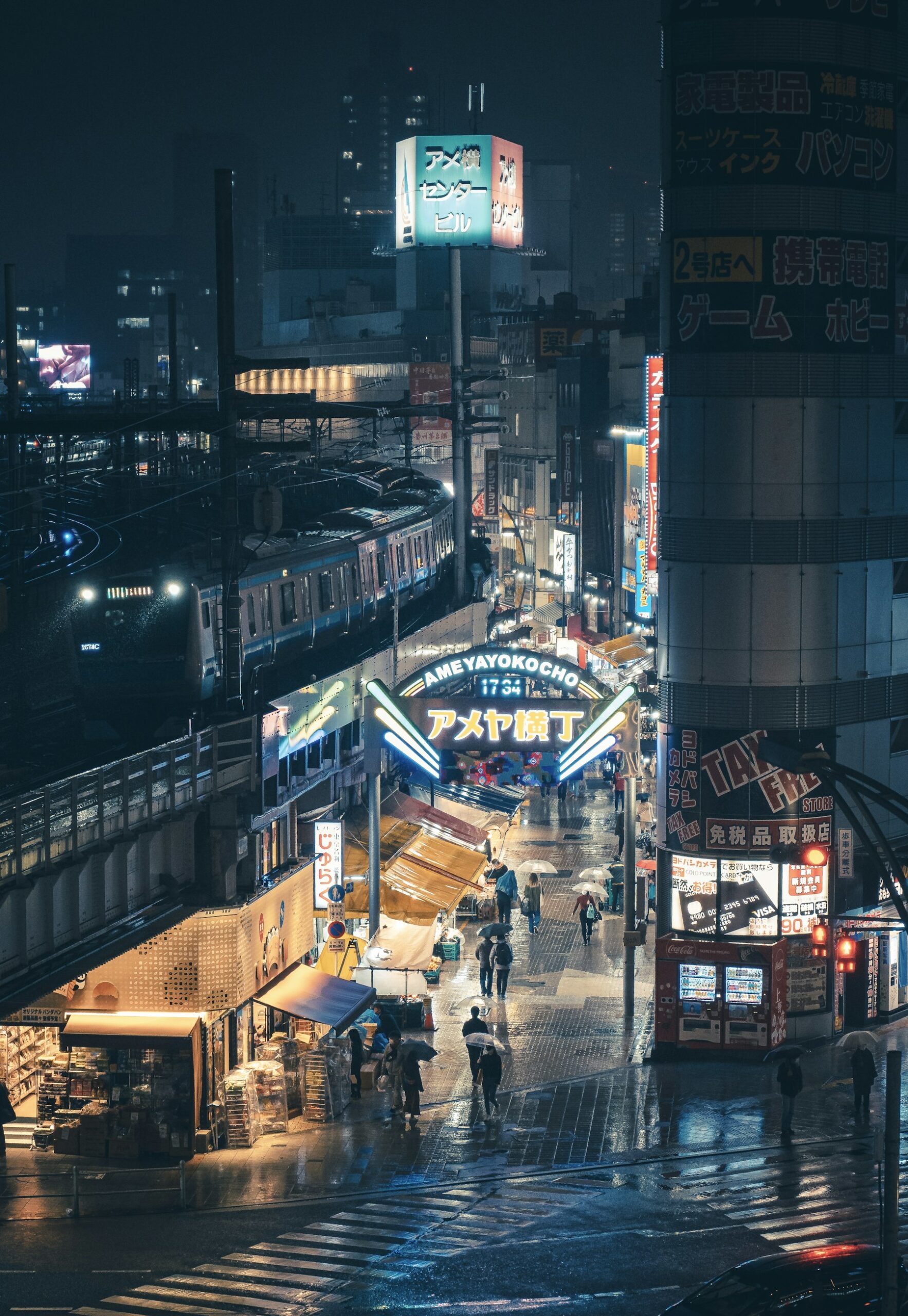
West of the station, Ueno Park brings together major museums, the zoo, ponds and broad walking paths. East and south, the mood changes quickly: practical hotels, office blocks, convenience stores and the food stalls and shopfronts of Ameyoko. It feels more lived-in and useful than polished. That is a benefit when you want an inexpensive meal, a pharmacy or a last-minute suitcase, but it is not the dreamy old-Tokyo scene some visitors imagine.
Families often do well here because a museum or park morning needs little transport, while JR connections simplify the rest of the day. Ueno is also forgiving when weather changes your plan. You can swap an outdoor outing for the Tokyo National Museum, National Museum of Nature and Science or another indoor stop without crossing the city.
Stay in Asakusa for temple atmosphere and slower evenings
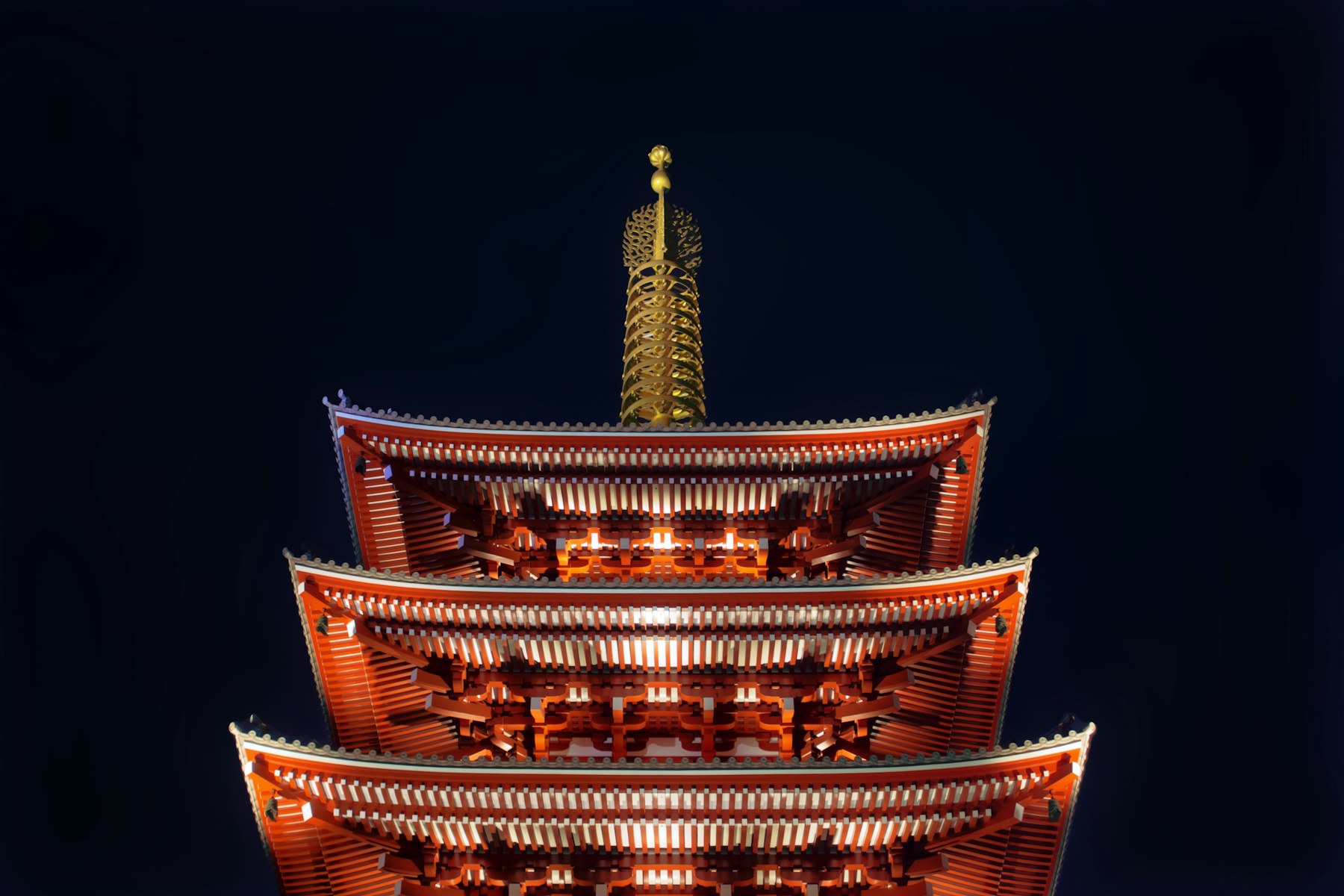
Asakusa gives you something Ueno cannot: the chance to experience Sensoji and Nakamise before tour groups arrive and after many day visitors leave. The vermilion gates, lantern-lit streets and older shopfronts make the neighborhood feel distinctly different from Tokyo’s glass-and-neon image. It is especially rewarding for photographers, couples and repeat visitors who want their hotel area to feel like a destination rather than a transport interchange.
Transport is good, but more specialized. The Tokyo Metro Ginza Line is the workhorse for Ueno and Ginza. The Toei Asakusa Line connects toward Nihombashi and can run through to Keikyu services for Haneda. Tobu Asakusa is the useful departure point for Tokyo Skytree and limited-express trains toward Nikko. The important catch is that “Asakusa Station” refers to separate stations run by different operators. They are walkable, but not one shared concourse.
If Nikko is a centerpiece of your trip, staying close to Tobu Asakusa makes the morning especially simple: limited-express journeys are roughly 1 hour 50 minutes. If you are still deciding between two classic Tokyo escapes, see our Kamakura vs Nikko day-trip comparison.
Airport access: Ueno wins Narita, Asakusa has a Haneda edge
From Narita, Ueno is the clear convenience winner. Keisei Ueno is a Skyliner terminus, so you can make the airport run without crossing central Tokyo. The Keisei station is separate from JR Ueno, but the walk is manageable if you choose a hotel on the park or south side of the area.
Asakusa can receive Keisei Access Express through-services on the Toei Asakusa Line, with an official indicative journey of about 50 minutes. The service pattern depends on the time, so do not assume every train is direct. Confirm the route for your flight day.
From Haneda, Asakusa can be simpler. Keikyu trains run through the Toei Asakusa Line, sometimes removing the transfer entirely. Ueno usually means combining Keikyu or the Tokyo Monorail with JR or metro. In both areas, the best hotel is the one that minimizes the final walk with luggage.
The exact micro-location matters more than the area name
- Ueno for Narita: look between Keisei Ueno, Ueno Park and the Shinobazu side. You trade a slightly longer walk to some JR platforms for a very easy airport departure.
- Ueno for JR and Shinkansen: favor the east or Iriya side of JR Ueno. The station is large, so a hotel described as “Ueno” can still be a tiring walk with bags.
- Ueno for dining: the strip toward Okachimachi puts Ameyoko and countless casual restaurants outside your door, while keeping JR and metro options close.
- Asakusa for Sensoji: stay north or west of the temple for quieter streets and early-morning access, but calculate the walk to the rail line you will use most.
- Asakusa for Haneda: favor the Toei Asakusa Line station rather than assuming every Asakusa hotel is equally convenient.
- Asakusa for Nikko: stay near Tobu Asakusa, on the east side by the Sumida River.
Open the map for every hotel and identify the precise station entrance—not merely the district name. A seven-minute walk on a flat street feels very different from navigating stairs, a busy crossing and several station levels with suitcases.
Which is better for families, food and nightlife?
Families
Ueno has the practical edge for most families. The park, zoo and museums provide several low-friction days, and the JR network reduces transfers. Asakusa works well for families who prefer compact outdoor sightseeing and river walks, but its separate stations can be awkward with a stroller. Our Tokyo with kids guide can help you match the area to your children’s ages and interests.
Food and nightlife
Ueno is better for spontaneous, casual evenings. Ameyoko and Okachimachi offer izakaya, grilled food, noodles and shopping late into the day. Asakusa has excellent tempura, soba, unagi and old-school cafés, but many traditional businesses close earlier. It is atmospheric rather than nightlife-focused. If bars and late trains are essential, neither competes with Shinjuku or Shibuya.
Hotel prices: compare your actual dates
Neither area is consistently cheaper. Ueno has a large supply of business hotels, while Asakusa mixes budget properties, compact modern hotels and ryokan-style stays. Cherry-blossom season, weekends, holidays and room size can reverse the apparent price advantage. Search the same dates, include taxes and check whether breakfast and cancellation are comparable.
Compare current Tokyo availability on Booking.com and Agoda. Use the map view to pin Ueno Station, Keisei Ueno, Sensoji and the relevant Asakusa station before comparing rooms.
Tokyo’s accommodation tax currently adds ¥100 per person per night for a room rate of ¥10,000 to under ¥15,000, or ¥200 at ¥15,000 and above; rooms under ¥10,000 are exempt. From April 1, 2027, Tokyo plans a 3% tax on accommodation charges of ¥13,000 or more per person per night. Check how your booking platform displays taxes, especially for a stay crossing that date.
Three easy decisions
- First trip, seven busy days, Narita flights: choose Ueno. The transport savings compound across the week, and your airport departure is straightforward.
- Couples’ trip, slow mornings, temples and photography: choose Asakusa. Stay near Sensoji but close enough to the Ginza or Toei Asakusa Line for the rest of Tokyo.
- Family trip with museums and multiple day trips: choose Ueno. Look for a larger room on the station side that matches the lines you will actually use.
If you expect to use many metro trips, do not buy a pass automatically: test your route plan against our guide to whether the Tokyo Subway Ticket is worth it. For a broader orientation, bookmark the Tokyo travel guide.
Final verdict
Ueno is the better default for an efficient first visit. It wins on Narita access, JR coverage, northbound Shinkansen trains, museums and practical family logistics. Asakusa is the better emotional choice. It gives you Sensoji at quiet hours, traditional streets and a memorable neighborhood identity, with useful links to Haneda and Nikko.
Choose the area whose advantage you will use every day. Then choose the hotel by the exact station entrance, not the neighborhood label. That final detail often matters more than the difference between Ueno and Asakusa itself.
Current-information note: Transport and tax details were checked on November 14, 2026 against JR East, GO TOKYO’s Ueno guide, GO TOKYO’s Asakusa guide, Tobu Railway, Narita Airport and the Tokyo Metropolitan Government. Timetables and fares can change; confirm your exact travel day.