
Namba and Umeda are both excellent Osaka bases, but they create noticeably different trips. Namba keeps food, nightlife and the city’s most recognizable evening atmosphere close to your hotel. Umeda puts you beside Osaka’s biggest railway hub, modern shopping complexes and convenient routes for exploring the wider Kansai region.
The short answer: choose Namba for a first Osaka visit focused on Dotonbori, food, shopping, nightlife and an easy Nankai arrival from Kansai Airport. Choose Umeda if your itinerary includes several JR day trips, you prefer a polished modern district, or you want easier access toward Kyoto, Kobe and Shin-Osaka. The best hotel is still the one closest to the station and railway you will actually use.
Namba vs Umeda at a glance
| Decision | Namba | Umeda |
|---|---|---|
| Best overall for | Food, nightlife, shopping and first-time Osaka atmosphere | JR connections, day trips and modern city convenience |
| Kansai Airport | Direct Nankai trains to Nankai Namba | JR Haruka, airport rapid services or airport bus |
| Evenings | Dotonbori, Ura-Namba and busy entertainment streets | Department stores, dining complexes, bars and skyline views |
| Day trips | Strong for Nara and southern Osaka; workable for Kyoto | Strong for Kyoto, Kobe, Himeji and JR-based travel |
| Hotel feel | Energetic, tourist-friendly, sometimes noisy | Modern, businesslike, convenient, sometimes less atmospheric |
| Station challenge | Several separate stations use the Namba name | Multiple connected Osaka/Umeda stations and many exits |
| Better for early nights | Possible, but choose a quieter side street | Usually easier away from the busiest entertainment pockets |
Choose Namba for food, nightlife and the classic Osaka evening
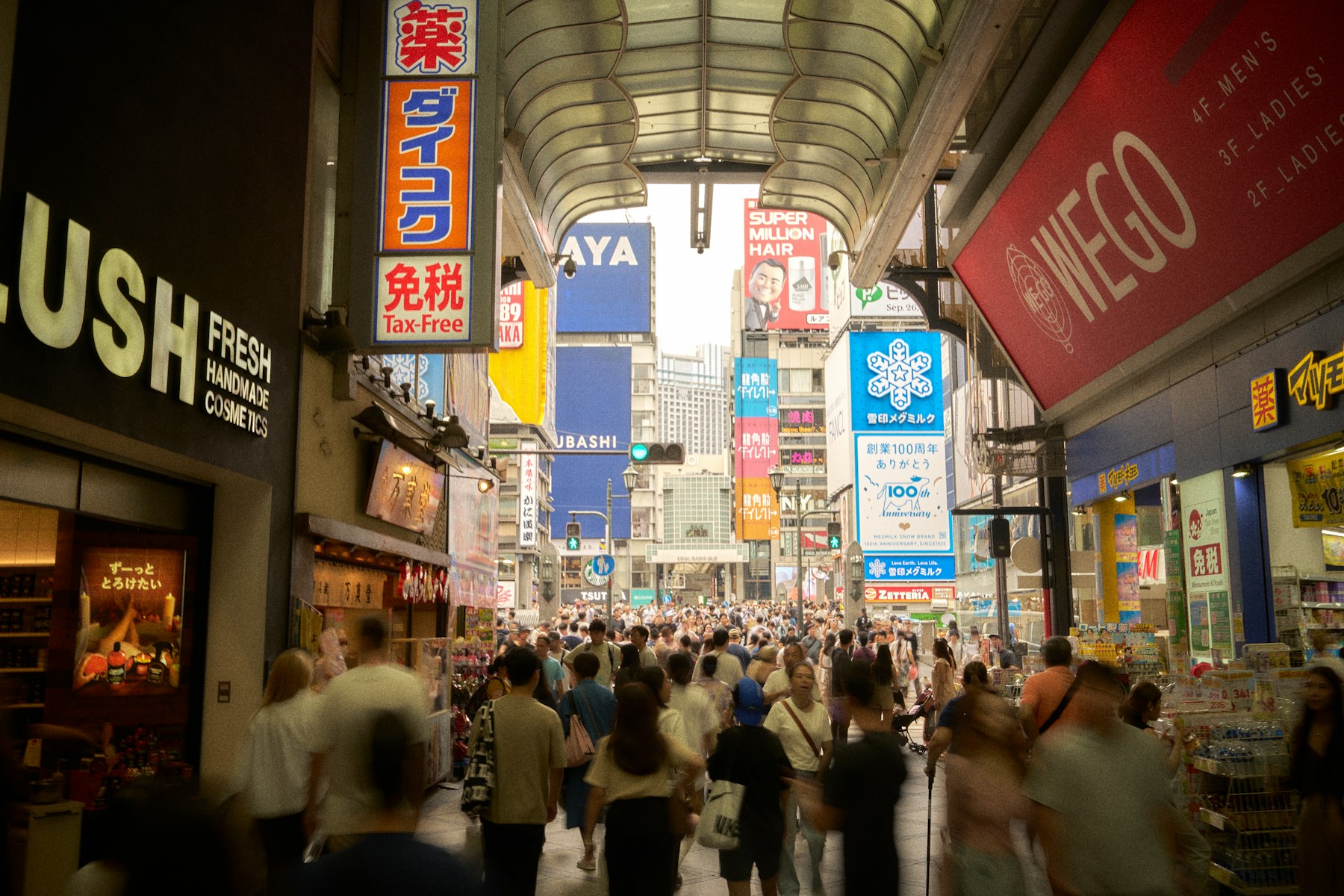
Namba is the stronger choice when the atmosphere outside your hotel is part of the trip. Dotonbori, Shinsaibashi, Kuromon Market, Nippombashi and Ura-Namba are close enough to combine without turning every evening into another train journey.
Osaka’s official tourism information describes the Minami area as an energetic crossroads of traditional culture, gourmet food and fashion. Dotonbori is the symbolic shopping and entertainment district, while nearby Kuromon Market has roughly 150 shops along its arcade. That concentration makes Namba especially useful on a short stay: you can return from sightseeing, rest at the hotel and still have many dinner options within walking distance.
Namba is usually better if:
- This is your first Osaka visit and you want the city’s famous evening energy nearby.
- Restaurants, street food, shopping and nightlife matter more than the fastest regional train connection.
- You are arriving at Kansai Airport and want a direct Nankai train to the hotel area.
- Nara is an important day trip and your hotel is convenient to Osaka-Namba/Kintetsu services.
- You have only two or three Osaka nights and want to minimize evening commuting.
Choose Umeda for trains, day trips and a modern city base
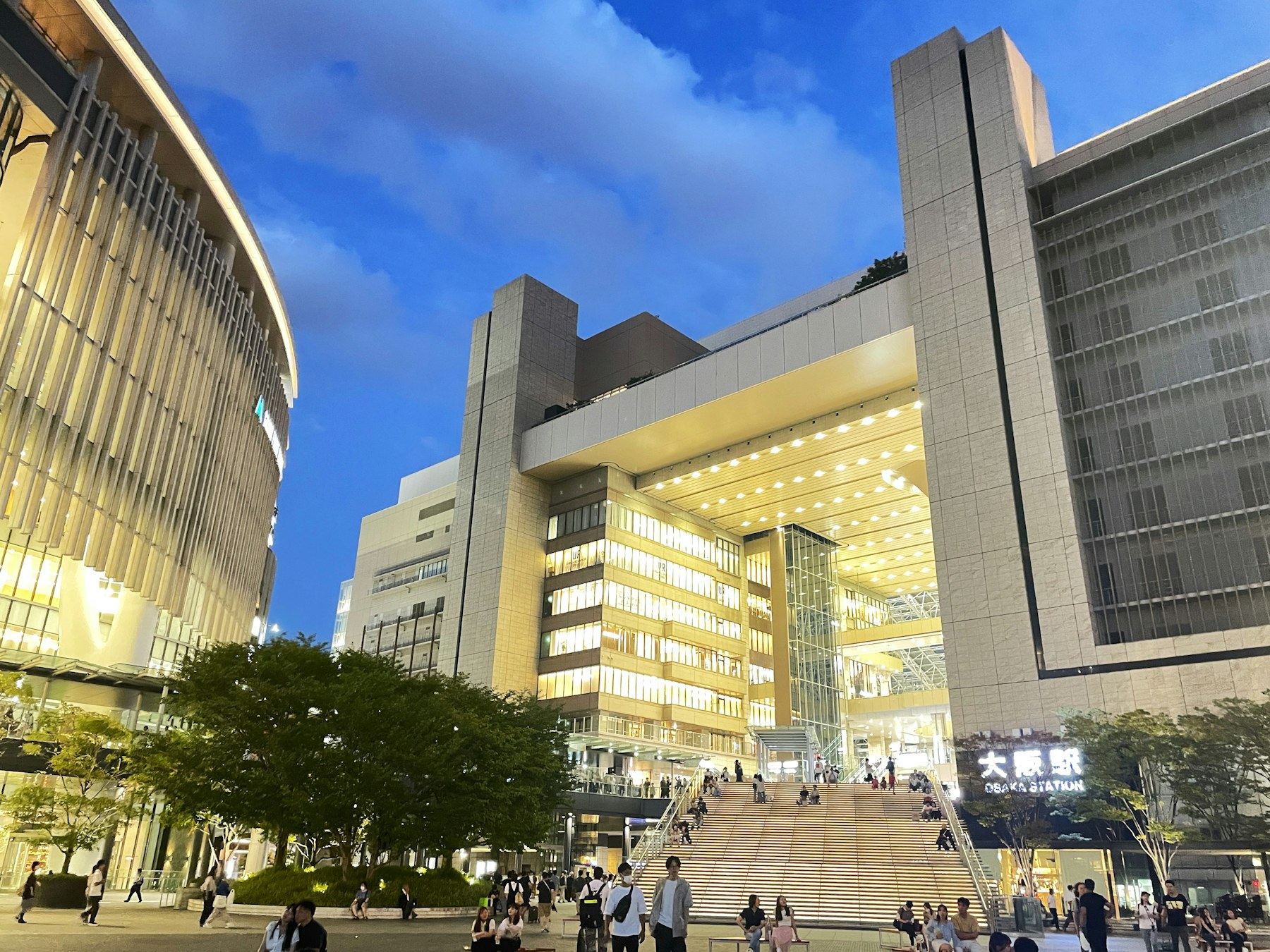
Umeda—also called the Kita or Osaka Station area—is the stronger base when transportation is the organizing principle of your trip. JR Osaka Station sits among Osaka-Umeda stations operated by Hankyu and Hanshin, plus several Osaka Metro stations. This gives you many route choices, but it also creates one of Japan’s most complicated station districts.
Osaka’s official tourism guide calls Kita the gateway to Osaka and highlights its department stores, shopping centers, offices and nearby Nakanoshima. Osaka Station City is directly connected to JR Osaka Station and combines shopping, dining and entertainment in one enormous complex. Umeda is not quiet or dull—it simply feels more polished and transport-centered than Namba.
Umeda is usually better if:
- Your itinerary includes several day trips toward Kyoto, Kobe, Himeji or other JR destinations.
- You are arriving on JR Haruka or staying near Osaka Station for onward travel.
- You prefer department stores, large dining floors and modern complexes to dense nightlife streets.
- You plan Universal Studios Japan and want straightforward access to JR services toward Universal City, with the necessary transfer.
- You want broad restaurant choice without being in the middle of Dotonbori’s late-night crowds.
Airport access: Namba has the simpler KIX story
For Kansai International Airport, Namba has the clearest single-company route. Nankai’s Limited Express Rapi:t connects Kansai Airport and Namba in as little as 34 minutes, while the Airport Express is slower but requires only the normal fare. If your hotel is close to Nankai Namba Station, this can be the easiest possible start or end to the trip.
Umeda remains well connected to KIX through JR services and airport buses. The deciding factor is the final walk. A hotel genuinely close to JR Osaka Station or a convenient limousine-bus stop can make Umeda straightforward, while a hotel described as “Umeda” but located across several underground passages may be less pleasant with luggage.
Use the Kansai Airport to Osaka guide to compare Nankai, JR and buses using your exact hotel address.
Day trips: Umeda is better for rail-heavy itineraries
Umeda is the more convenient base when Osaka is functioning as a launch point for the wider region. JR Osaka Station and the Hankyu/Hanshin Osaka-Umeda stations give you useful options toward Kyoto, Kobe and beyond. You can also reach Shin-Osaka quickly for Shinkansen journeys.
Namba is not isolated. It has Osaka Metro connections, Kintetsu/Hanshin at Osaka-Namba, Nankai services and JR Namba farther west. It can be especially convenient for Nara and southern destinations. The problem is that “Namba Station” is not one single platform complex: your hotel may be close to Nankai Namba but inconvenient for JR Namba, or vice versa.
If Kyoto will occupy much of the trip, compare the practical tradeoffs in Kyoto or Osaka: Where Should You Stay? and use the Kyoto to Osaka train guide.
Which area is better for families?
Umeda often works better for families taking multiple train day trips because you can reduce repeated transfers. Large shopping complexes also provide indoor dining, toilets and weather-proof backup plans. However, station navigation can be tiring with a stroller, so choose a hotel on the same side of the station as the railway you expect to use most.
Namba can be better when the family wants easy evening meals and attractions within walking distance. Select a hotel on a quieter street rather than directly beside the busiest Dotonbori nightlife. Families can use the Osaka with kids guide for realistic pacing and attraction choices.
Which area is better for nightlife?
Namba wins for visible, spontaneous nightlife. Dotonbori, Ura-Namba, bars, food streets and late shopping are woven into the neighborhood. You do not need a carefully planned night to find something open and interesting.
Umeda has extensive dining and nightlife, but it is distributed across station buildings, department-store restaurant floors, office towers and entertainment pockets. It suits travelers who want choice and convenience without living directly beside Osaka’s most intense tourist streets.
Hotel-location traps to avoid
- Do not book by neighborhood name alone. Plot the hotel entrance and your most-used station gate on a map.
- Check the railway company. Nankai Namba, Osaka-Namba, JR Namba and Osaka Metro Namba are connected in parts but not interchangeable.
- In Umeda, check the correct side of Osaka Station. A hotel near one Umeda operator can still require a long underground walk to another.
- Look for elevators. A slightly longer street-level route can be easier than stairs with suitcases or a stroller.
- Read recent noise reviews. This matters more around Namba’s entertainment streets.
- Confirm room size. Osaka business hotels can be compact even when the lobby and location look impressive.
For travel days with large bags, the Japan luggage forwarding and storage guide can help you decide whether to carry, store or forward them.
Best choice by trip style
| Your trip | Better base | Why |
|---|---|---|
| First Osaka visit, two nights | Namba | More of the classic food-and-nightlife experience is walkable |
| Osaka plus Kyoto and Kobe day trips | Umeda | Stronger regional railway positioning |
| Late KIX arrival | Namba if Nankai still fits | Direct airport railway to the hotel area |
| Food-focused couple | Namba | Easy spontaneous evenings and bar-hopping |
| Family using Osaka as a Kansai base | Umeda | Fewer cross-city transfers for many rail journeys |
| Shopping and modern architecture | Umeda | Major department stores and station complexes |
| Nara priority | Namba | Convenient access to Kintetsu routes from Osaka-Namba |
Should you split your stay?
Usually not. Namba and Umeda are linked by the Osaka Metro Midosuji Line, so changing hotels rarely saves enough time to justify repacking. Choose one base and visit the other for an afternoon or evening.
A split stay makes sense only when it solves a specific problem—for example, finishing several nights in Namba and moving to a hotel directly beside Osaka Station before a very early regional departure. Even then, compare the hotel-change effort with simply taking one short subway or taxi ride.
How each area fits a two-day Osaka plan
From Namba, begin with Kuromon Market, Nippombashi or southern neighborhoods, then return easily for Dotonbori at night. From Umeda, pair Osaka Station City and Kita with Osaka Castle or Nakanoshima, then ride to Namba for the evening.
The Osaka 2-day itinerary and Osaka Amazing Pass guide can help you group attractions without crossing the city repeatedly.
Final recommendation
For most first-time visitors who want Osaka to feel lively the moment they leave the hotel, Namba is the more memorable choice. It is especially strong for short stays, food-focused trips and a straightforward Kansai Airport transfer.
Choose Umeda when convenience across the wider Kansai region matters more than staying beside Dotonbori. It is the better transport base for rail-heavy itineraries and travelers who prefer modern shopping and dining complexes.
Whichever area you choose, prioritize the exact station entrance and final walk over a small hotel-price difference. Start with the broader Osaka Travel Guide before booking.
Compare Osaka hotels
Once you have chosen the neighborhood, compare Osaka hotels on Booking.com or browse Osaka accommodation on Agoda. Filter by map location and verify the nearest station entrance before committing.
Affiliate disclosure: Japan Travel may earn a commission if you book through selected links, at no extra cost to you. Neighborhood and transport details were checked against official Osaka tourism, Osaka Metro, Nankai and JR information on October 24, 2026.